

Living Dangerously

Final touches

Garhi Khuda Bukhsh | Pray for peace

Burning memories

Remembering a warrior

Extreme selfies — don’t try these at home


The Telegraph brings us some of the most bizarre, yet amazing slefies ever taken.


CCP probing Toyota, Suzuki practices
ISLAMABAD: The Competition Commission of Pakistan (CCP) has initiated an inquiry into the possible anti-competitive behaviour of two car manufacturers who are putting unreasonable financial burden on the consumers.
The inquiry, under Section 37 of the Competition Act, 2010, is being conducted after the commission received various complaints regarding high prices of vehicles, hefty advance payments, delay in delivery of passenger vehicles, charging of premiums for on-spot delivery, and no facility to recall vehicles.
The inquiry will initially cover the market for consumer vehicles ranging between the engine capacity of 800cc to 1299cc in which Indus Motor Company Limited and Pak Suzuki Motor Company Limited are dominant players.
One of the major concerns shared with CCP is the consistent upward trend in prices of cars without an up-gradation of the technology.
Although the prices of locally assembled cars have increased manifolds over the past years, the manufacturers have failed to take significant measures to upgrade engines and add safety features corresponding to the increase in prices.
Similarly, one of the gravest predicaments faced by consumers of new cars is the requirement of hefty advance payments for placing the order to book a car. In this regard, it has been observed that Suzuki requires full advance payment despite a non-negotiable delay in the delivery of its vehicles.
Toyota has slashed this requirement to considerable extent, however, it still requires the buyers to pay 30 per cent of the total price of the vehicle in advance.
The advance payment requirement on the one hand rids the customers of the opportunity to earn profits on their cash, and on the other hand allows the manufactures to accrue that profit for themselves, the CCP noted.
The delay in delivery of vehicles is another burning issue. Despite having ample access capacity of dominant manufacturers, the delay is questionable particularly in the case of those models that have not undergone considerable changes and whose demand forecast can be made with relative certainty.
As is the case of advance payments, the delay in delivery of vehicles is linked to the benefits forgone by the consumers.
Furthermore, the charging of premiums by the authorised dealers of dominant manufactures for on-spot delivery has the potential to create a predicament where the manufacturer or dealers find it to their advantage to delay the deliveries of car in order to make more revenue.
It has been brought to the CCP’s knowledge in a meeting with the Engineering Development Board that neither manufacturer appears to be facilitating the option of recall of vehicles, which prima facie, indicates a lack of a healthy competition in the market.
In light of the seemingly dominant positions held by Toyota and Suzuki in the consumer vehicle sector, it appears that consumers are being left without alternatives to consider. Through this investigation, CCP will determine whether the behaviour by Toyota and Suzuki constitutes the imposition of unfair trading conditions in violation of Section 3 of the Competition Act.
Published in Dawn, June 26th, 2015
Indian recipe to fix banking sector flawed
HONG KONG: India’s piecemeal approach to fixing its banking sector is flawed.
The government may double the amount it will inject into state lenders to $3bn this year, and again next year. Though the increase is welcome, it’s still a fraction of the $50-odd billion that government-controlled banks may need to fix their balance sheets and meet new capital requirements. India needs to be more aggressive.
The current hand-to-mouth strategy is understandable but unworkable. Narendra Modi’s government has sought to cut the cash it hands over to banks and only allocate funds to those institutions that met certain return targets.
It has also encouraged banks to go out and raise capital. The problem is that weak earnings and a slower-than-expected pickup in the economy means few banks are able to attract outside investors. The government’s reluctance to reduce its shareholdings below 50 per cent is another hurdle. A drive to improve governance will take more time.
The state banks desperately need more equity. They dominate a national banking system where more than 10pc of assets were stressed as of March 2015, according to credit ratings firm ICRA — and that’s just the ones lenders admit to. The real number may be twice as high.
Even if state banks set aside sufficient provisions to just cover existing impaired loans, Morgan Stanley analysts estimate that the core Tier 1 capital ratios of the institutions they cover would fall to between 4 and 7pc. The problem is likely to be even worse for the smaller, weaker, public sector lenders.
The government already missed a prime opportunity to tackle the problem when the stock market soared on hopes of economic reform. Investors have since tempered their enthusiasm: some bank shares have fallen by more than a third this year. Capital could become even harder to find when the US Federal Reserve raises interest rates.
A much larger recapitalisation would widen India’s fiscal deficit. But it would also ensure that the banks are ready to fund the country’s investment cycle when it eventually picks up. The government’s piecemeal approach risks dragging on India’s growth.
Published in Dawn, June 28th, 2015
Nepra reduces wind power tariff by 20 per cent
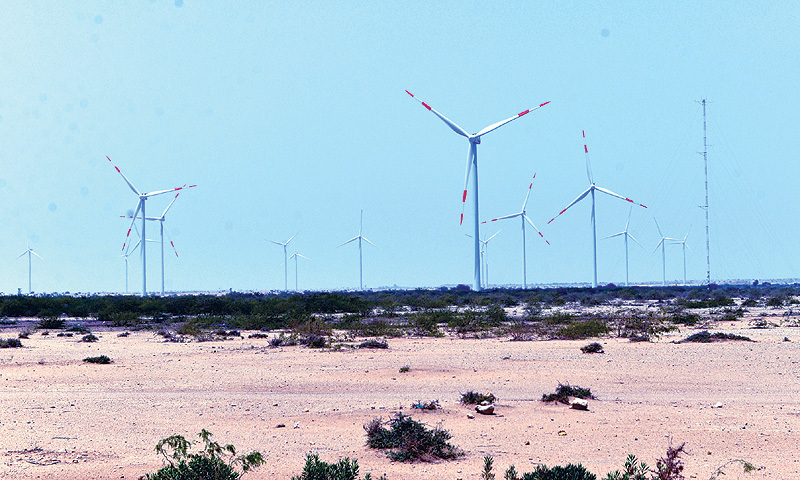
ISLAMABAD: Amid criticism, the National Electric Power Regulatory Authority (Nepra) has reduced levelised upfront tariff for wind power projects by 20 per cent to Rs10.6048 per unit from Rs13.1998.
The revised tariff came after protests by the Sindh government over a ban imposed by the federal government on new wind and solar projects. The centre said the temporary ban was meant to translate falling technology prices of wind energy in the international market into domestic tariff.
The revised tariff was, however, immediately rejected by the investors of wind energy projects. They alleged that the energy policy was heavily tilting towards Punjab-based solar power projects, about 1,000MW of which had been awarded to a single firm through a negotiated deal instead of bidding.
Nepra said on Thursday the new tariff would remain applicable for six months from the date of notification. The investors opting for this tariff are required to achieve financial close within one year from the date of award of upfront tariff to them.
The targeted maximum construction period after financial close is 18 months. “This initiative, besides ensuring energy security, will provide clean, renewable energy at an affordable price to the consumers and help mitigate power shortfall,” Nepra added.
It said wind power tariff had been reduced because of advancement in technology and it would benefit economy and industry due to its unique benefits and competitiveness.
“It is a shocking tariff,” said a wind energy investor, adding that 1,000MW solar projects in Punjab had been given higher tariff despite its 17pc plant efficiency, compared to wind energy’s 38.5pc plant efficiency.
On top of that, he said, the power agreement would be finalised only on the basis of yet to be completed grid study by the National Transmission and Dispatch Company (NTDC). This means the wind project will not apply for tariff with Nepra before the NTDC’s grid report, being the pre-requisite.
Published in Dawn, June 27th, 2015
Govt to recover all circular debts through consumer tariff

ISLAMABAD: The government and regulators have decided to settle all outstanding gas receivables and electricity circular debt against lower international fuel prices instead of directly benefiting the consumers.
On Friday, the National Electric Power Regulatory Authority (Nepra) approved a reduction of Rs2.62 per unit in fuel price of electricity tariff but decided to withhold 76 paisa per unit to recover Gas Infrastructure Development Cess (GIDC).
As a consequence, Nepra allowed Rs1.86 per unit reduction in tariff on account of monthly fuel adjustment for April.
This reduction would not be available to consumers using less than 300 units a month as, under a recent decision, the government felt these consumers were already getting subsidised electricity.
Power rates cut by Rs1.86 per unit
The government has committed with the International Monetary Fund to ensure recovery of Rs145 billion from consumers on account of GIDC during the outgoing fiscal year and wipe out power sector circular debt in three years through tariff adjustments.
At a public hearing presided over by Nepra Chairman Tariq Sadozai, the regulator allowed electricity companies to about Rs11bn GIDC arrears in instalments from the power consumers. The recovery of GIDC imposed in last year’s budget had been stayed by various high courts on different grounds and finally cleared by the Supreme Court of Pakistan.
The Central Power Purchasing Agency (CPPA) requested Nepra to reduce power tariff by Rs2.62 per unit on account of fuel adjustment for April. Nepra noted that it was an appropriate time that recovery of GIDC adjustment be made in consumer tariff as lower fuel prices would help reduce electricity cost.
Therefore, it imposed 76 paisa per unit GIDC on gas to be used as fuel by power producers to recover Rs11bn in instalments in April, May and June that would be made part of bills for August and September.
The remaining relief of Rs1.86 per unit would be passed on to consumers in the billing month of August. The rate cut will not apply to K-Electric consumers.
The CPPA told the public hearing that 7.17bn units were sold to power distribution companies at a cost of Rs45.2bn in April. The transmission losses stood at 2.19 per cent. The reference fuel price was Rs8.92 per unit which was recovered from consumers in April but actual cost worked out at Rs6.30 per unit because of lower fuel prices and better energy mix.
The share of hydropower generation was 20.06pc, furnace oil 39.32pc, gas 26.7pc, coal 0.18pc, HSD (high speed diesel) 5.06pc and nuclear 5.88pc. The cost of furnace oil-based generation came out at Rs9.86 per unit, HSD at Rs13.85, natural gas Rs5.18, coal Rs4.49 and nuclear power Rs1.18. Hydropower generation did not have any fuel cost component.
In a related decision, Nepra allowed power firms to burden consumers with Rs11bn arrears on account of GIDC following the passage of GIDC Bill 2015 by parliament after its clearance from the apex court.
The power regulator believed that it would be adjusted to absorb the impact of falling oil prices in future fuel price adjustments and, therefore, consumers would not feel additional burden.
The tariff for gas-based power plants would go up by Rs4.3 to Rs4.5 per unit for the recovery of Rs11bn arrears from the consumers.
Engro Powergen Qadirpur Limited (EPQL) filed a petition before the Nepra against GIDC Act 2015 pleading that the demand raised by SNGPL (Sui Northern Gas Pipelines Limited) for recovery of GIDC due from 2013 to May 2015 in lump sum cannot be met because the petitioner had never recovered it from NTDC (National Transmission And Despatch Company), the sole purchaser of the electricity produced by EPQL.
Fauji Kabirwala’s power plant also requested that GIDC should be treated as a change in law and allowed as pass-through in tariff. GIDC adjustment was allowed in case of five IPPs — Engro Foundation, Saif, Sapphire, Orient and Halmore.
It was further pleaded that the recovery could not be affected as Nepra had not revised the tariff of the petitioner to factor in GIDC due to various restraining orders passed by different high courts. The distribution companies were to recover the same from electricity consumers. Therefore, the situation had been complicated and court directed the power regulator to look into this matter.
The cess was imposed by the previous government of Pakistan Peoples Party (PPP) to raise funds for gas import projects like Iran gas pipeline and LNG import. The government has collected Rs94bn so far. But the money was not used for these projects and this cess was turned down even by the Supreme Court on technical grounds.
The present government has succeeded to get the GIDC bill 2015 passed from parliament to legalise already collected Rs94bn and to collect arrears from the gas consumers.
The SNGPL had also asked gas-based independent power producers to pay arrears but the EPQL moved to court and Nepra has now decided to recover Rs11bn arrears from the power consumers on account of fuel adjustments. The share of gas-based plants is around 22pc.
Nepra increased gas price for power plants by Rs100 from Rs488.23 per million British thermal units (mmbtu) to Rs588.23 per mmbtu on account of GIDC.
Published in Dawn, June 27th, 2015
No longer so secret, Swiss banks look to expand after purge
ZURICH: Switzerland’s private banks are close to ridding themselves of undeclared European accounts, a salutary process but one which has undermined efforts to grow their businesses.
Following the financial crisis, cash-strapped governments chased accounts hidden at banks in Zurich, Geneva and Ticino where wealthy Europeans had taken advantage of Switzerland’s famous bank secrecy rules.
Stunned by arrests of high-profile clients for tax evasion, large numbers of European citizens have joined voluntary disclosure programmes and pulled cash from Swiss banks to pay penalties and clear back taxes.
After billions of Swiss francs in withdrawals, recent figures from UBS suggest the tide is beginning to turn.
In the first three months of 2015, the Zurich-based bank reported its steepest quarterly net percentage rise in European assets in over three years. That has helped to justify the bank’s decision to refocus on wealth management and slim down its investment bank.
“For the industry, and in particular UBS, the bulk of the European cross-border outflows may be behind us,” said Kinner Lakhani, an analyst at Citi.
Wealth in western Europe is expected to grow more slowly than the global average in the coming years, according to a Boston Consulting Group study.
But European clients are frequently viewed as more profitable because they are willing to pay banks higher fees to manage their often-inherited wealth.
There are still bumps in the road ahead for Swiss banks.
A global tax data sharing programme, which Switzerland is set to implement from 2018, could trigger a fresh round of outflows, especially from emerging market depositors.
An end to European withdrawals however, would make it easier for banks to grow the amount of assets they manage. In recent years Swiss private banks have had to drum up fresh business simply to offset the amount of withdrawals.
Clearing the books of undeclared accounts has been no small task. One prominent Swiss banker estimates that they made up more than 80 per cent of many banks’ assets prior to the financial crisis.
But at the end of 2014 some 95pc of German assets with Swiss banks had been declared, according to the Swiss Bankers Association. The industry group expects this to reach 100pc by the end of 2015.
France, Britain and Austria have also given taxpayers the chance to disclose undeclared accounts.
Bank secrecy in Switzerland for foreign account holders was effectively when the country signed up to the Organisation for Economic Cooperation and Development’s (OECD) tax data sharing programme last year.
Published in Dawn, June 28th, 2015
HSBC Bank Oman agrees to sell Pakistan business to Meezan Bank

DUBAI: HSBC Bank Oman has agreed to sell its banking business in Pakistan to Meezan Bank , a sharia-compliant Pakistani lender, it said on Sunday.
The deal, which is subject to regulatory and other approvals, is expected to be completed during the second half of 2015, the bank said in a statement.
The business had one branch and gross assets of around $40 million as of March 31, it said.
Also read: HSBC to axe 50,000 jobs in radical overhaul
The sale, at a small discount to the net asset value of the business, will not materially impact the full-year profits of HSBC Bank Oman, it said.
The bank is an indirect 51 percent-owned subsidiary of HSBC Holdings.
SBP injects Rs668bn into banks
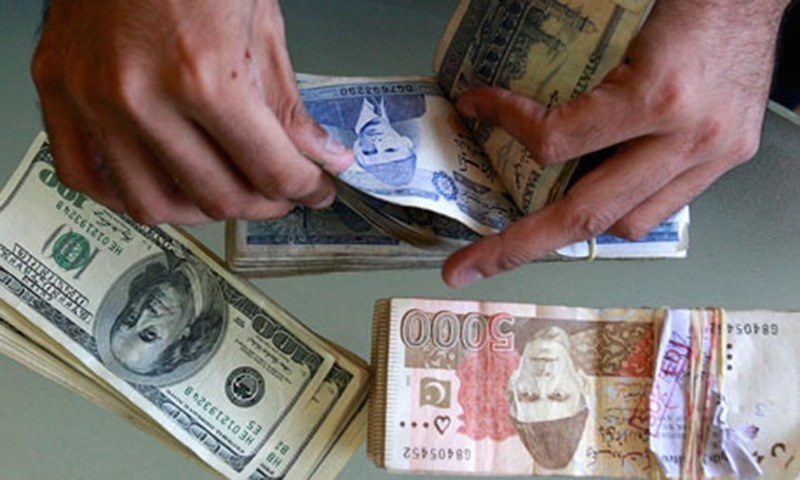
KARACHI: The State Bank of Pakistan (SBP) injected Rs667.8 billion into the banking system on Friday to meet the liquidity gap emerged after heavy government borrowing from the banks.
The central bank injected Rs624.8bn for seven days and Rs43bn for four days, with rate of return at 6.51 per cent and 6.50pc, respectively.
During the outgoing fiscal year, the banks mostly remained short of liquidity and the SBP kept injecting money into the system.
The main reason for this liquidity gap was huge investment by the banks in the government papers, which offers them better risk-free returns and their assets quality has also improved with low infected loans.
However, this easy profitability has practically disconnected banks with the market economy. They extend low-risk and short-term loans to agriculture sector and industries for meeting their working capital needs.
Traders and industries found it hard to use banks for their new projects.
They complain that banks put a number of conditions for loans and their charges are much higher than the policy interest rate announced by the government.
A leading industrialist was of the view that banks would not take risk while they can earn by lending to the government.
The SBP’s latest report shows that the private sector credit off-take was Rs115bn in the outgoing fiscal year compared to Rs294bn in the previous year, a sharp decline despite frequently falling interest rates.
The central bank cut key lending rate from double digits to 7pc, but the private sector remained unmoved and did not show any interest to borrow from the banks.
The government failed to achieve economic growth target in FY15, but it believes the situation would improve in FY16. However, it seems difficult to achieve growth without the participation of banks.
Though banks have changed their strategy, to short-term treasury bills from Pakistan Investment Bonds, their investments are still in the government papers.
Published in Dawn, June 27th, 2015
The dichotomy of a burgeoning crude relationship
RIYADH: The budding relationship between Riyadh and Moscow is faced with a reality check.
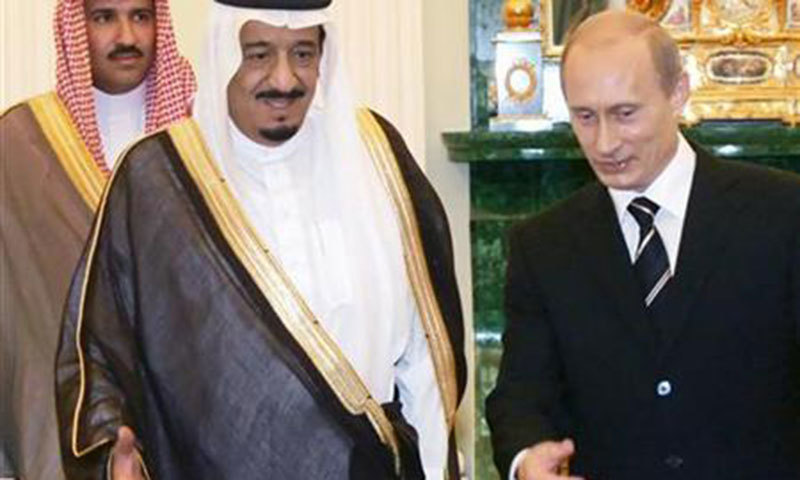
In the rapidly changing geopolitical environment, Saudi Arabia and Russia are forging ahead — fostering a closer relationship. When the Saudi Deputy Crown prince Mohammad bin Salman, accompanied not only by foreign minister Adel bin Jubeir but also petroleum minister Ali Al-Naimi, called on Russian President Vladimir Putin in St. Petersburg on June 18, six major deals were signed between the world’s two top crude producers.
The deals ranged from agreement in defence sector to enhanced cooperation in energy development. It also covered greater cooperation on nuclear energy development.
Interestingly during the visit, the two sides also announced forming a working group for joint energy projects. Given that the US and EU sanctions limit the transfer of new oil and gas technology to Russian state oil firms, reports indicate that Russia could be seeking enhanced oil and gas recovery and advanced drilling technology from Saudi Arabia, especially for use in the older fields in West Siberia.
With a growing list of global research centers in Beijing, Houston, Aberdeen, Massachusetts and others, Saudi Aramco is today regarded as the biggest global investor in new oil and gas technologies.
But while Saudi Arabia and Russia seem to be expanding their relationship, they continue to compete, rather fiercely, for crude market share. In May, Russia’s oil output reached a record 10.78 million barrels a day, pretty close to the Soviet era production of 1987. This was significantly up from May last year, when Russian production stood at 10.08m bpd. And the world’s leading crude exporter, Saudi Arabia’s output is also in top gear. Saudi output went up by 697,000 bpd between February and May, this year, rising to 10.3m bpd in May 2015, as against 9.69m bpd a year earlier.
And there are indications this could go up further. Oil Minister Ali al-Naimi said in St. Petersburg the country has about one and a half million to 2m bpd of spare capacity, and is ready to raise production if demand calls for such an action. Goldman Sachs and Citi Group are also now projecting that Riyadh will likely start to push production to 11m bpd in the second half of 2015.
And China remains the focus of attention. From Moscow to Riyadh and Tehran to Baghdad, all major stake holders seem to be concentrating on Beijing to ensure a healthy pie of the Chinese cake. For now though, Moscow seems to have pipped Riyadh as the top supplier to Biejing.
In May, China imported a record 3.92m tonnes from Russia, Bloomberg reported. That’s equivalent to 927,000 barrels a day, a 20 per cent increase from the previous month. Russian exports to China have more than doubled since 2010. As western sanctions over the Ukraine crisis started to bite, Moscow has had to seek alternative markets.
A number of other factors too seem to be aiding Moscow in its bid to expand it crude sales to China – at the expense of Saudi Arabia and others. Moscow’s decision to accept the proceeds from oil sales in Chinese currency yuan seems to have helped significantly in the rise in exports to Beijing. Further, in 2013, Russia’s largest oil producer, Rosneft, signed an $85 billion deal with China’s Sinopec to deliver 100m tonnes of crude over 10 years. And then Rosneft also struck a 25-year contract, worth $270bn, with Chinese state-owned oil company CNPC for the delivery of 365m tonnes of oil.
Consequent to the development, Saudi crude exports to China, slumped by 42pc last month from April, to 3.05m tonnes - 722,000 bpd.
However, one needs to underline here, with brute summer around and the Saudi domestic consumption on rise, its crude exports could get compromised during the months. Less export to China may also be a manifestation of that.
Yet the fact remains that despite growing cooperation, Russia and Saudi Arabia continue to fiercely compete in the global crude markets. And that is the dichotomy of this otherwise burgeoning relationship.
Published in Dawn, June 28th, 2015
The dichotomy of a burgeoning crude relationship
RIYADH: The budding relationship between Riyadh and Moscow is faced with a reality check.
In the rapidly changing geopolitical environment, Saudi Arabia and Russia are forging ahead — fostering a closer relationship. When the Saudi Deputy Crown prince Mohammad bin Salman, accompanied not only by foreign minister Adel bin Jubeir but also petroleum minister Ali Al-Naimi, called on Russian President Vladimir Putin in St. Petersburg on June 18, six major deals were signed between the world’s two top crude producers.
The deals ranged from agreement in defence sector to enhanced cooperation in energy development. It also covered greater cooperation on nuclear energy development.
Interestingly during the visit, the two sides also announced forming a working group for joint energy projects. Given that the US and EU sanctions limit the transfer of new oil and gas technology to Russian state oil firms, reports indicate that Russia could be seeking enhanced oil and gas recovery and advanced drilling technology from Saudi Arabia, especially for use in the older fields in West Siberia.
With a growing list of global research centers in Beijing, Houston, Aberdeen, Massachusetts and others, Saudi Aramco is today regarded as the biggest global investor in new oil and gas technologies.
But while Saudi Arabia and Russia seem to be expanding their relationship, they continue to compete, rather fiercely, for crude market share. In May, Russia’s oil output reached a record 10.78 million barrels a day, pretty close to the Soviet era production of 1987. This was significantly up from May last year, when Russian production stood at 10.08m bpd. And the world’s leading crude exporter, Saudi Arabia’s output is also in top gear. Saudi output went up by 697,000 bpd between February and May, this year, rising to 10.3m bpd in May 2015, as against 9.69m bpd a year earlier.
And there are indications this could go up further. Oil Minister Ali al-Naimi said in St. Petersburg the country has about one and a half million to 2m bpd of spare capacity, and is ready to raise production if demand calls for such an action. Goldman Sachs and Citi Group are also now projecting that Riyadh will likely start to push production to 11m bpd in the second half of 2015.
And China remains the focus of attention. From Moscow to Riyadh and Tehran to Baghdad, all major stake holders seem to be concentrating on Beijing to ensure a healthy pie of the Chinese cake. For now though, Moscow seems to have pipped Riyadh as the top supplier to Biejing.
In May, China imported a record 3.92m tonnes from Russia, Bloomberg reported. That’s equivalent to 927,000 barrels a day, a 20 per cent increase from the previous month. Russian exports to China have more than doubled since 2010. As western sanctions over the Ukraine crisis started to bite, Moscow has had to seek alternative markets.
A number of other factors too seem to be aiding Moscow in its bid to expand it crude sales to China – at the expense of Saudi Arabia and others. Moscow’s decision to accept the proceeds from oil sales in Chinese currency yuan seems to have helped significantly in the rise in exports to Beijing. Further, in 2013, Russia’s largest oil producer, Rosneft, signed an $85 billion deal with China’s Sinopec to deliver 100m tonnes of crude over 10 years. And then Rosneft also struck a 25-year contract, worth $270bn, with Chinese state-owned oil company CNPC for the delivery of 365m tonnes of oil.
Consequent to the development, Saudi crude exports to China, slumped by 42pc last month from April, to 3.05m tonnes - 722,000 bpd.
However, one needs to underline here, with brute summer around and the Saudi domestic consumption on rise, its crude exports could get compromised during the months. Less export to China may also be a manifestation of that.
Yet the fact remains that despite growing cooperation, Russia and Saudi Arabia continue to fiercely compete in the global crude markets. And that is the dichotomy of this otherwise burgeoning relationship.
Published in Dawn, June 28th, 2015
France hold Pakistan to 2-2 draw in HWL semi-finals

Pakistan hopes of finishing second in Pool A were dashed by a spirited France side as the teams played out a 2-2 draw on day 8 of the Hockey World League Semi-finals in Antwerp, Belgium, on Sunday.
Pakistan had only themselves to blame for not closing out the game, the Greenshirts missing several opportunities in front of goal. Captain Mohammad Imran missed from the spot after Les Bleus gifted their opponents a penalty stroke in the first quarter.
But it was France which lead the match twice thanks to goals by Simon Martin Brisac and Charles Masson.
Pakistan restored the parity through goals from Waqas Sharif and Mohammad Dilber but it was a game which they really should have won.
Pakistan finished the pool phase in third place and will face the team that finished second in Pool B in the cross-over quarter-finals.
“France played well but we were quite sloppy. I think in the whole of the game we had too many chanced that we missed,” said Greenshirts captain Imran after the match.
“We will learn from our mistakes and plan for the quarter-final.”
The Hockey World League Semi-finals, a qualification tournament for the 2016 Rio Olympic Games, kick off from July 1.
What will the new league do for women’s cricket?
Last week, the ECB announced its intention to stage a Women’s Cricket Super League (WCSL) in England from 2016, featuring six as-yet-unknown teams hosted by “cricket-minded organisations”. The league has been described by the ECB head of women’s cricket, Clare Connor, as “the most significant development in this country for women’s cricket for a very long time”. It’s no wonder that the excitement at Loughborough, where the announcement took place, was so palpable.
There are countless reasons why a WCSL is significant for the women’s game. But one in particular stood out for me. Connor in the press release described the ECB’s vision for “an exciting, dynamic game which will inspire new participants, new fans and increased interest from commercial partners and the media”. The media. The same media who, to a voice, currently ignore women’s domestic cricket altogether.
When’s the last time you read a match report of a women’s county game here on ESPNcricinfo, or on BBC Sport? When’s the last time you watched more than 30 seconds of a women’s county game on Sky? The answer is: never. To read reports on women’s county games, you would have to go here, or here, or here – websites run by fans of the women’s game, who write about women’s county cricket because they love it, with no hope or expectation of payment. The huge increase in media coverage of international women’s cricket in recent years is brilliant, but there’s surely still a big problem if everything that happens below international level is totally ignored.
How will Sky’s commentators on the women’s Ashes this summer know who is in form, and who isn’t? When the Ashes squad is announced, and one of the players outside the contracted 18 is included, how will the journalists assigned to cover the announcement know who she is? (In fact none of them seemed very aware of who Sonia Odedra was when she was selected last summer for the Test against India.) How can anyone become aware of who the up-and-coming players are? And in any case, there are plenty of very good women’s county cricketers out there who turn in week in, week out for their county, but who may never play for England. Do they really deserve to be ignored?
Many of those reading the WCSL announcement were probably unaware of the current women’s county set-up, and of the problems the ECB is trying to tackle head-on. Unaware that women’s domestic cricket, despite having been in existence since the 1930s, has always been and remains totally amateur. Women’s counties are still generally run by volunteers, with a fraction of the budget of their male counterparts. Match fees for players are a far-distant dream.
Yes, some of the men’s counties are beginning to wake up and smell the coffee, but it has been a long time coming. Sarah Clarke – who has just become Surrey’s all-time leading wicket-taker in the Women’s County Championship – recently received her cap from Surrey CCC, before their Pemberton-Greenish Cup match against Middlesex at The Oval. It was a special moment, no doubt, but watching it, I couldn’t silence the little voice in my head wondering why she had had to wait 16 years for the club to recognise her contribution.
The problem of trying to attract interest in domestic cricket has dogged women’s cricket throughout its history. And the idea of a tier of cricket separate from county and international levels is not a new one. The first ever public women’s cricket match in England was held at Beckenham in 1930, between the North and the South. A territorial system, whereby matches were staged annually between teams from the North, the South, the Midlands, the East and the West, was instituted by the Women’s Cricket Association (WCA) right from the earliest days of its existence.
Then, as now, the aim was to have the best playing the best. That was the surest way to develop the sport, and to attract media attention. In fact, the Cricketer magazine contained a full report of the 1930 Beckenham game, concluding: “From first to last… the cricket was of a really high standard… The work being done by the Association is distinctly praiseworthy, if only because it is proving, and in no uncertain manner, that the game is suitable for women.”
The problem for the WCA was always money. How do you support another tier of cricket when your players (many of whom have full-time jobs or families) don’t have the time or the money to travel 100 miles to play in a cricket match? The territories limped along until 1967. Then they became “playing areas”. The strongest counties (Kent, Middlesex, Surrey, Sussex, Yorkshire) continued to exist in their own right, while the weaker ones banded together. It didn’t really solve the problem.
Now, suddenly, the new Super League has the potential to do so. The ECB is investing £3 million in the new structure, and the hope is that hosts will gain commercial investment, in order to facilitate player payment for the first time in the history of women’s domestic cricket. Six teams, featuring the most talented female players in the country, playing at high-quality grounds, in a semi-professional league. It sounds an enticing prospect, doesn’t it? Not a bad way to awaken media interest in domestic women’s cricket.
So my hopes for the Super League are high. I hope we see the league covered by media outlets like ESPNcricinfo. I hope I can open a newspaper and read about it. And I hope that, for the first time ever, I might be able to turn on my TV and watch a women’s domestic game ball by ball.
Sangakkara to retire during India series in August

COLOMBO: Sri Lanka’s batting great Kumar Sangakkara on Saturday ended speculation about his future, saying he will retire during the home series against India in August. “This is my time to call it a day,” Sangakkara, 37, told reporters on the sidelines of the second Test against Pakistan at the P. Sara Oval in Colombo. The left-hander said he will play two of the three Tests against India that will take place in Sri Lanka in August. The exact dates and venues have not yet been announced.
Sangakkara, the current world leading Test run-getter, said he will also skip the third and final Test of the ongoing series against Pakistan starting in Pallekele on July 3. “I wanted to retire after the World Cup, but was requested by the selectors to stay on,” he said. “I agreed to play four more Tests. I will honour that agreement. I gave my word, so will stand by that.” Sangakkara’s 12,305 runs and 38 centuries are the most by any batsman still playing Tests, way above second-placed Alastair Cook of England, who has 9,000 runs and 27 hundreds.
The 132-Test veteran may be below record-holder Sachin Tendulkar’s Test tally of 15,921 runs and 51 hundreds, but his 11 scores of 200-plus are just one short of Australian legend Don Bradman’s record of 12. “I don’t want to prolong my career for records,” said Sangakkara. “I don’t want to extend my career for individual records. This is the time to go.” In the first Test against Pakistan in Galle, Sangakkara hit a 50 in the first innings – his 52nd half-century – and 18 in the second when Sri Lanka were shot out for 206 to lose by 10 wickets. He fell for 34 in the first innings of the ongoing second Test.
Sangakkara had hammered 203 against New Zealand in Wellington in January to continue a prolific streak that saw him make 221 against Pakistan and 319 against Bangladesh last year. Sangakkara retired from Twenty20 cricket after helping Sri Lanka win the World Twenty20 title in Bangladesh last year and quit one-day internationals after the recent World Cup Down Under where he smashed four consecutive centuries.
“I am going to miss playing for Sri Lanka a lot,” he said. “I had the time of my life playing for Sri Lanka. I enjoyed playing every format but donning whites for Sri Lanka has been special. “I can walk away happy that good days outweigh the disappointments.” Asked when he first thought of retiring, Sangakkara said, “My father asked me a couple of years ago ‘don’t you think it’s time to think of retirement?’ I was shocked. “But it struck home that it was time to think of the future.”
Sangakkara added his two-year contract with English county Surrey did not hasten his decision to retire from Tests, as he dismissed the idea of becoming a coach after retirement with a laugh saying he would “make a bad coach”. “I don’t know if I will have the patience for that,” he added. He predicted a bright future for the young Sri Lankan team under Angelo Mathews and urged fans to have patience with them. “There is a lot of talent and ability in the dressing room,” Sangakkara said. “Angelo is a fantastic cricketer and captain. He is the ideal man to lead Sri Lanka. “I wish there will be real culture of fearless cricket. Give this team a period of a year and they will come a long way.”
Hamilton receives royal table lessons from the Queen

LONDON: The Briton Lewis Hamilton might be a wizard on the racing track but the Formula One World Champion received an important lesson on table manners when he was asked to dine with the Queen. Hamilton received a summons to join Her Majesty for lunch but instead he was gently rebuked by the Monarch over his table etiquette. Thirty-year-old Hamilton who was invited to sit next to The Queen at lunch said on the BBC’s Graham Norton show: “I got invited to a lunch and was sitting next to The Queen. I was excited and started to talk to her but she said, pointing to my left, ‘No you speak that way first and I’ll speak this way and then I’ll come back to you. She is a sweet woman and we talked about how she spends her weekends, houses and music. She is really cool.”
Explaining the Queen’s message, a spokesman for Debrett’s – the society etiquette expert, told the Telegraph: “The Queen would begin to speak to the person on her right, the guest of honour – for the duration of the first course.” “For the next course she would speak to the person seated to her left. This thus indeed means it is convention at a dinner party to speak to the guest seated to one’s left before speaking to the one on the right – also with the Queen.” The BCC Sport’s Personality of the year 2014 has received an MBE – Member of the Most Excellent Order of the British Empire from the Queen in 2009 after he became the youngest ever winner of the Formula One World Drivers’ Championship. Hamilton is not the only high-profile figure to fail to adhere to Royal protocol. Michelle Obama, First Lady of the United States, was reprimanded on a state visit to Britain in 2009 when she hugged The Queen during a photo call and former US president George Bush received criticism when he suggested the 89-year-old Queen had celebrated US bicentennial in 1776.
Khattak spends Rs40m on gifts, breaking Sardar Mehtab Khan’s record

PESHAWAR:
Chief Minister Pervez Khattak spent Rs 40 million on gifts for dignitaries and guests during the fiscal year 2014-15, overtaking Governor Sardar Mehtab Ahmed Khan’s record, who spent Rs 14 million, according to sources.
The CM House’s total annual allocation was Rs264 million while an additional Rs60 million was spent.
The CM Secretariat employs as many as 313 people, out of which 71 are high-ranking officials.
During the last financial year, the CM House consumed electricity worth Rs22 million, gas worth Rs0.65 million. Rs26 million has been allocated for gas expenditures for 2015-16, according to reports.
A total of Rs3.65 million was spent on the registration of new vehicles, furniture worth Rs2 million was bought. Additionally, Rs10.65 million was spent on construction and repairs while Rs13.8 million was spent on transportation costs.
The CM House’s helicopter, aeroplane and staff vehicles burnt fuel worth Rs15 million.
Nawaz flies to Karachi, inquiry into electricity begins

ISLAMABAD / KARACHI: Prime Minister Nawaz has prepared to fly to Karachi to investigate how heatwave caused thousands of deaths in Sindh.
The Sindh government alleges that the heatwave was exasperated by the power crisis in the country and the federal government has reigned on its election promise of putting out outages within six months, as per reports.
Premier Nawaz Sharif is expected to visit Karachi either on Monday or Tuesday to discuss the heatwave aftermath and other issues, his office confirmed on Saturday.
Karachi heat wave kills 20 more people

KARACHI:
High temperatures claimed 20 more lives in the city today, according to sources.
According to Sindh health department statistics, since June 20, a total of 1,206 have died in Karachi alone due to the heat wave.
Commenting on the situation, Provincial Minister for Health Jam Mahtab claimed some deaths could be prevented if loadshedding comes to an end.
He added that 35 per cent of those who had died were women.

Gilani's son no more a graduate
LAHORE: The Punjab University Syndicate on Saturday quashed the bachelor’s degree of Abdul Qadir Gilani, the eldest son of former PM Yousuf Raza Gilani, on charges of impersonation.
Appearing in the BA examination 2005-6, Abdul Qadir was first accused of causing disturbance in the examination hall after being caught using unfair means. An unfair means case was registered against him but a committee constituted by then VC Arshad Mahmood exonerated him of the charge.
Meanwhile, the ACE also started a probe into the case after the matter was referred to it by the FIA. Investigation came to a halt after the transfer of a deputy director (Adm) leading the two-member inquiry team.
The case was re-opened and the PU initiated a de novo inquiry into the matter. The Syndicate decided with a majority vote that the BA degree of Abdul Qadir be quashed.
Published in Dawn, June 28th, 2015
Sindh Is About The Politics Of Fear
TO the average, apolitical observer, the politics of Sindh makes little sense. MQM in Karachi, Hyderabad; PPP in interior Sindh — it adds up to quite the horror show.
Sure, the mercenary politics of Punjab, the tribalism of Balochistan and the ruthlessness of the Peshawar valley have their own peculiarities. But what the heck is up with Sindh?
Now that the boys have decided to take on cleaning up Sindh a bit, that question is being asked in nuanced and glib ways. The nuanced variation is, what’s the endgame here?
Any which way you look at it, even if you factor in decapitation, it’s not like the MQM and the PPP will simply dissolve under pressure.
Any which way you look at it, even if you factor in decapitation, it’s not like the MQM and the PPP will simply dissolve under pressure.
But then, if you unpack what is being attempted, at its core it amounts to a re-engineering of the two parties. After all, if the baseline is the elimination or surgical separation of the MQM’s militant wing, would not that cause the party itself to collapse?
And if the baseline with the PPP is choking off Asif and Faryal’s epic plunder, would that not fundamentally alter the party set-up in Sindh? Hence, the nuanced question: what’s the endgame here? IE do the boys really know what they’re doing?
The glib variation is, why are the MQM and PPP so impervious to disaster?
Punjab swaps its mercenaries around; the Peshawar valley has swung MMA, ANP and PTI in three successive elections; hell, even Balochistan mixes up its winning permutation of sardars and tribals from election to election.
But no matter what the MQM does to Karachi and Hyderabad and no matter what the PPP does to Sindh, they get voted in — 90pc Karachi, Hyderabad to MQM; 60pc interior Sindh to PPP.
It’s manifestly self-defeating — and yet, the vote is real and not significantly coerced. Sure, the MQM pads its seat count through brute force and the PPP has its regressive landowners, but a great deal of the support for both parties is genuine.
Perhaps though the nuanced and the glib questions have a common answer: Sindh is about the politics of fear. A double-layered fear, the first of the Mohajirs within Sindh and the second of the Sindhis within the federation. Fear — and look away now if you’re a supporter of either — is perhaps the essence of the MQM and the PPP vote banks.
There is no one history of the Mohajir in Sindh. Even between the neighbours Karachi and Hyderabad the trajectories were different and the responses to religious, liberal and nationalist influences varied. But if time can be measured in Sindh — post-Partition Sindh, that is — there is the pre-language riots and the post-language riots of the early 1970s.
The language dispute pit the educated, plugged-into-the-state-apparatus, job-holding, middle-class Mohajir against a new, eternal rival: the newly educated, wanting-to-plug-into-the-state-apparatus, white-collar-job-seeking, rising-middle-class Sindhi.
Curiously, Altaf’s great contribution was to paper over this rivalry. Altaf’s brand of Mohajir nationalism centred, originally, not on suspicion of Sindhis, but on anti-settlerism, ie anti-Punjab, anti-Pakhtun.
But that recalibration couldn’t hide the basic dynamic: the Mohajirs needed a strong, muscular, singular party to protect their jobs, to protect the resources they commanded, to protect their place in the provincial pecking order and to protect the Mohajir’s image of himself.
Minus the MQM, there is really no one to prevent a siphoning off of resources from the Mohajir to the Sindhi and the Sindhi potentially squashing the Mohajir. Many a Sindhi would scoff at that possibility, but that’s the thing about fear: it responds to what is imagined, not what is likely.
Which is why, much as you can find disquiet within the MQM’s support base at the party’s long slide towards a mafia-esque existence, the supporter remains loyal: the Mohajir needs the MQM more than perhaps the MQM needs the Mohajir.
With the Sindhi you can sense a similar contradiction: in the instinctive veneration of the Bhuttos of yore, there is perhaps a deep unease with the PPP of today. But an old logic still applies.
The PPP was and is the only vehicle for the Sindhi to be able to press his case at the national level, inside the federation. ZAB was the dream in that he could woo and win in Punjab too, assuring the Sindhi that his interests would never be harmed at the centre.
Minus the PPP, the Sindhi is left with the fractious nationalist alternative and a scrabble of useless winners who can barely project power outside their constituencies. Minus the PPP, the Sindhi has no one who can lobby on his behalf and fight for his rights against the dominant Punjab at the centre.
Minus the PPP, the Sindhi is vulnerable. And so they keep voting PPP.
There is another part to it, to the staticness in Sindh. The PTI missed a trick in Sindh because when the Mohajir showed some interest in the PTI, the PTI didn’t reciprocate. The Mohajir, especially the white-collar, educated, aspirational Mohajir, is a natural fit for the PTI’s urban-centric politics — and the Mohajir need not worry about the PTI aligning with the PPP.
But Imran showed little interest in anything outside Punjab and that was that.
With the Sindhi, some among its burgeoning middle class wonder why it has not sprouted an alternative to the PPP and the coterie of nationalists and thugs. But they also tend to answer their own question: the dirty little secret of interior Sindh is that the PPP has bought off the middle class too, fattened it to the point of stupor and numbed its instinct for political dissent and organisation.
So, there it is. The MQM may be a monstrosity and Zardari’s PPP may be a monstrosity, but both stand on old edifices of fear — the Mohajir’s fear inside Sindh and the Sindhi’s fear inside the federation.
Which goes back to the nuanced question: what’s the endgame here? IE do the boys really know what they’re doing?
Published In Dawn News: June 28'th. 2015
Published In Dawn News: June 28'th. 2015
Subscribe to:
Posts (Atom)