Prime Minister demands answers over Pakistan's hockey embarrassment

ISLAMABAD: Prime Minister Nawaz Sharif, who is also patron-in-chief of Pakistan Hockey Federation (PHF), has expressed concern over the embarrassing performance of the national team in World Hockey League and its failure to qualify for 2016 Rio Olympics.
A day after Pakistan's shock defeat to Ireland, Sharif sought explanation from the PHF and the Ministry of Inter Provincial Coordination about the dismal state of the national sport and how a three-time Olympic gold medalist had plunged so low.

Pakistan hockey is suffering the most because of:
The premier also asked the ministry to firm up recommendations for the uplift of the sport with an aim to regain its past glory.
Pakistan failed to qualify for the Olympics for the first time in their illustrious hockey history after losing to Ireland 1-0 in the 5-8 position classification match of the Hockey World League in Antwerp, Belgium on Friday.
It was another low for Greenshirts who for the first time in the game's history had failed to qualify for the World Cup last year.
Pakistan needed to finish at least in the 5th spot at the Hockey World League to have any hopes of getting a ticket to next year's Rio Olympics. But they were once again guilty of not capitalising on opportunities in front of goal.
“This is a dark day for Pakistan,” said Rashid Mehmood, as he left the pitch following Pakistan's defeat.
Only one in 10 homes in rural India has fridge

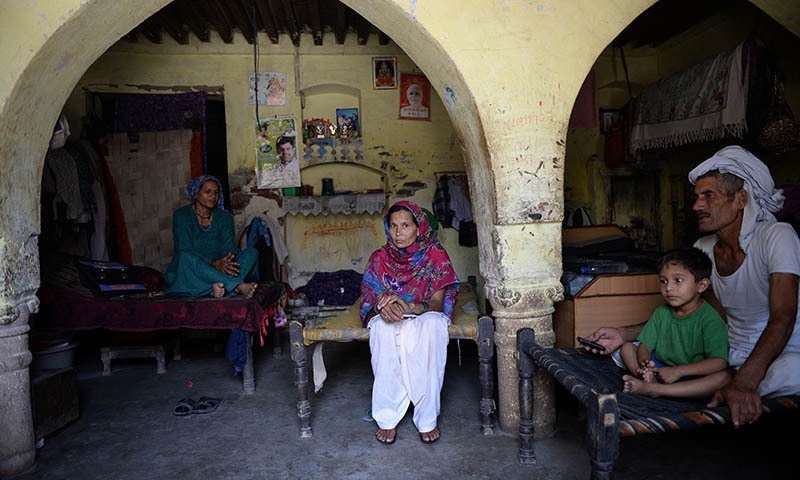
NEW DELHI: The main breadwinner in three-quarters of households in rural India makes less than $80 a month while barely one in 10 homes has a refrigerator, a survey showed on Friday.
While living standards have grown rapidly in India’s towns and cities in the last two decades, the census of some 180 million rural households highlighted how many of the poorest states are lagging far behind.
“This will give us a measure of the progress made by different sections and help with future policy planning,” Finance Minister Arun Jaitley said at a press conference to mark the launch of the survey conducted in 2011.
While the survey did not give the national average, it showed only 25.5 per cent of rural households had someone who earned more than 5,000 rupees (around $80) a month while just 9.68pc included a member who draws a regular salary.
Previous government data covering the same period put the nationwide average monthly income at around 5,130 rupees.
The survey did illustrate how ownership of mobile phones is now widespread in rural areas, with 68pc of households owning at least one device.
But only 11pc of households had a fridge and that figure slumped to around 3pc in the third largest state of Bihar and in Chattisgarh, which is one of the focuses of an insurgency by Maoist rebels.
A survey by Euromonitor released last year said that around 27pc of all Indian households owned a fridge, against an Asia-wide average of around 65pc.
With most rural livelihoods at least partly dependent on agriculture, India’s Prime Minister Narendra Modi has recently launched a series of farming initiatives — including a new $8 billion irrigation scheme — after accusations his government has been too business-friendly.
Published in Dawn, July 4th, 2015

Chinese air force uses drone for first time

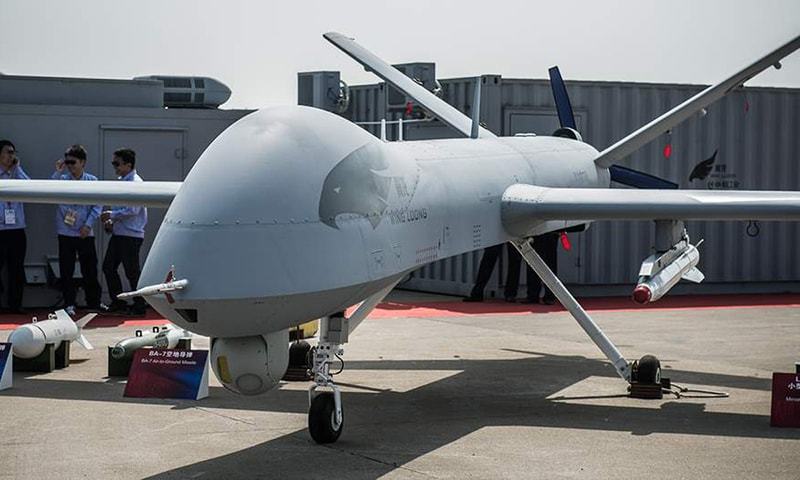
BEIJING: China’s air force dispatched a drone to the site of an earthquake in the far western region of Xinjiang on Friday to help in monitoring work, in what it said was the first time it had used an unmanned aircraft for such a task.
China is developing an ambitious drone programme for use at home, and also for export, as part of modernisation efforts for the world’s largest armed forces.
The air force said in a statement on the Defence Ministry’s website that the single drone was dispatched to the southern part of Xinjiang shortly after the quake struck and it “got a timely understanding of disaster relief needs”.
It flew for 100 minutes over the quake zone, sending back accurate “scientific facts” about the situation on the ground. The ministry gave no other details.
The quake hit a remote and mostly rural region, killing at least six people. Southern Xinjiang is the heartland of the Muslim Uighur people who call the region home.
The rapid deployment of the drone suggests the air force is already using them in Xinjiang, a restive part of the country, where hundreds have died in the past few years in violence blamed by Beijing on Islamist militants.
Xinjiang, strategically located on the borders of India, Pakistan, Afghanistan and Central Asia, is one of China’s most politically sensitive areas.
Exiled Uighur groups and human rights activists say the government’s own repressive policies and religious and cultural restrictions have provoked unrest, an accusation the government denies.

Syria mosque blast kills 25 Al-Nusra fighters: monitor

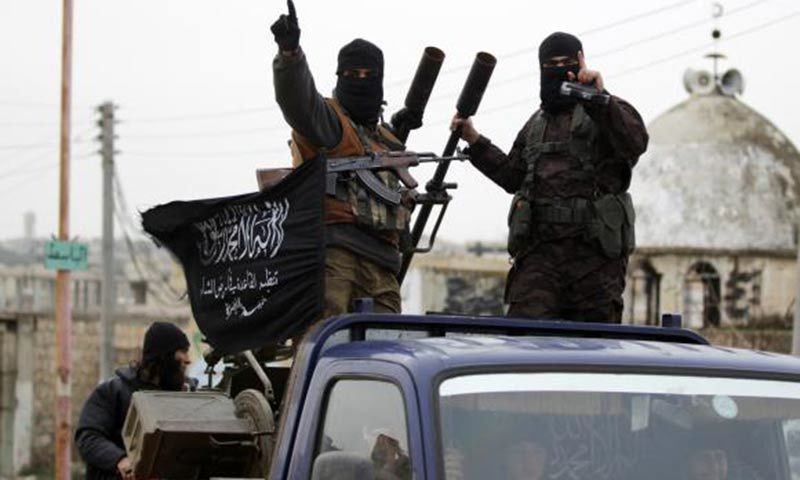
BEIRUT: An explosion in a mosque in northern Syria killed 25 members of Al Qaeda's Syrian affiliate, including one of its leaders, as they attended evening prayers, a monitoring group said Friday.
Director of the Syrian Observatory for Human Rights Rami Abdel Rahman said the death toll could rise as dozens of civilians were also injured in the explosion during Iftar prayers in the city of Ariha.
“Twenty-five members of Al-Nusra Front, including a leader of the group, died in an explosion inside a mosque in the city of Ariha, in Idlib province,” the Britain-based observatory said.
It was not immediately clear what caused the explosion.
Activist group the Syrian Revolution General Commission said “hundreds of civilians were assembled for an Iftar with the Al-Nusra Front in the Salem mosque in the west of Ariha when the blast went off during evening prayers”.
Civilians were also among those killed while praying, the group said, without giving further details.
Most of Idlib province is now under rebel control, after an alliance of opposition groups including Al-Nusra Front evicted regime forces from their last strongholds.
More than 230,000 people have died in Syria since anti-government protests erupted in 2011, precipitating a civil war pitting pro-government forces, rebels and jihadist groups against each other.

Sindh govt 'apathetic' towards heatwave victims: Reham Khan

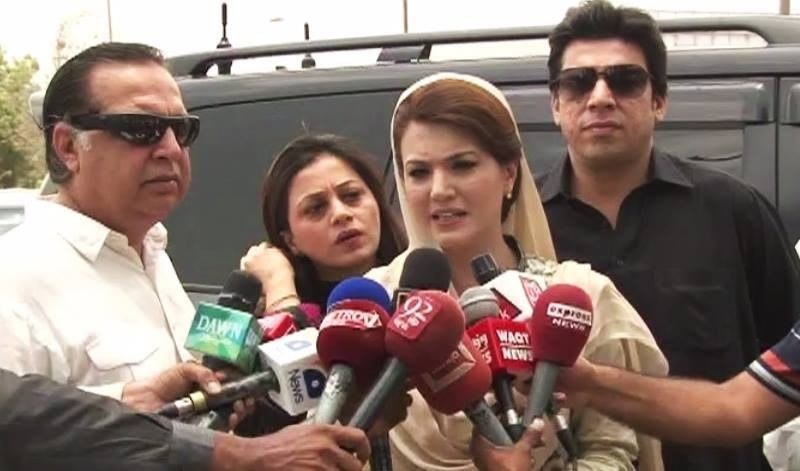
KARACHI: Reham Khan, wife of Pakistan Tehreek-i-Insaf (PTI) Chairman Imran Khan, said Saturday that the approach of the Sindh government towards heatwave victims was apathetic.
Speaking to media representatives upon her arrival at Karachi's Jinnah Hospital, Reham said the provincial government of Sindh did not want to accept any responsibility.
She said her visit was a follow-up of the PTI's chief earlier Karachi visit, adding that the purpose of her arrival was completely humanitarian.
Earlier, speaking upon her arrival in Karachi outside the Jinnah International Airport, Reham said that she had personally organised a shelter where people can come and seek respite from the heat during the day.
"We will provide water, iftar and a cool environment for our brothers and sisters for however long this difficult time prevails."
The PTI chief's wife was, however, quick to point out that it was the responsibility of the Sindh government to cater to heatwave victims.
"This is not the first time this has happened in Pakistan. You cannot say that this is freak weather. This has happened before and you [Sindh government] have no arrangements for a rapid response."
The scorching heatwave that struck Sindh since the start of Ramazan claimed the lives of over 1,300 people — with most of the deaths taking place in Karachi.
The crisis centred in the metropolitan city was worsened by poor service delivery, including a faulty power grid and shortage of potable water.

Govt to borrow Rs1.35 trillion in July-Sept

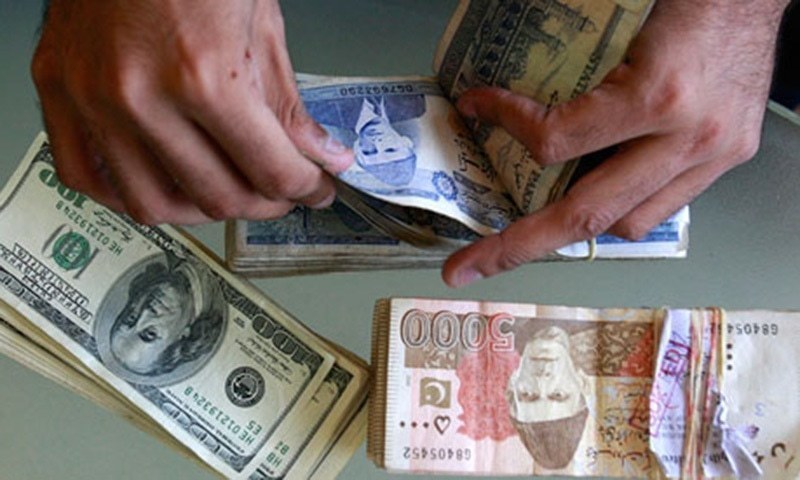
KARACHI: The government plans to borrow Rs1.35 trillion through the banking system in the first quarter (July-Sept) of this fiscal year, continuing the trend it followed during the previous year.
The State Bank of Pakistan (SBP) reported on Friday that the government has slashed the selling of Pakistan Investment Bonds (PIBs) by limiting them to Rs200 billion during the quarter.
The PIBs had been the biggest attraction for the banks for the last two years as they invested heavily in the long-term, risk-free and high-yielding bonds.
A recent SBP report shows that banks and non-bank financial institutions (NBFIs) total PIBs investment as of May 31, 2015 stood at Rs2.9tr and Rs1.2tr, respectively. Most of the investment was made during the last two years.
The SBP’s auction calendar shows that the government will raise Rs100bn in the mid of this month and Rs50bn each in the next two months through PIBs. The government will borrow Rs1.15tr through the sale of Market Treasury Bills during the quarter.
The government has been dependent on borrowing, particularly from banks, for the last two fiscal years, and it has overburdened the economy. It failed to achieve its revenue target in 2014-15 and borrowed heavily to meet its budgetary gap.
Another report of the State Bank shows that the government’s net borrowing during the previous fiscal year (as of mid-June) reached close to Rs1tr, a considerably big amount compared to Rs327bn FY14.
However, despite heavy borrowing to keep fiscal deficit within limit allowed by the IMF and to spur economic growth, the government has failed to catch both the targets.
The borrowing plan for the July-Sept quarter also reveals that the government would continue to rely on borrowing from other sources like it did in the last two years.
Banks invested more than Rs5tr in government papers while non-bank financial institutions invested Rs1.6tr as of May 31.
Along with these domestic borrowing, the government has projected to arrange Rs896bn through foreign sources to meet its budgetary expenses of this fiscal year.
Having failed to achieve the fiscal deficit target for FY15, the government hopes to keep it at 4 per cent of GDP in FY16.
However, the first-quarter borrowing trend shows that the government would adopt the same approach as it did in the last two fiscal years.
Published in Dawn, July 4th, 2015

India funded militants in Kashmir to counter ISI, says ex-RAW chief

In a startling admission, former chief of India's premier intelligence agency Research and Analysis Wing (RAW) Amarjit Singh Dulat said Indian intelligence agencies over the years often paid militants and separatists along with mainstream politicians and political parties in India-held Kashmir to compete for influence with Inter-Services Intelligence (ISI).
In an interview with NDTV's high-profile TV anchor Barkha Dutt ahead of the launch of his book, 'Kashmir: The Vajpayee Years', Dulat asked: "So what's wrong? What is there to be so shocked or scandalised by. It's done the world over."
He defended the use of money in India-held Kashmir, saying it was done in the hope of engaging militants and separatists.
"Corrupting someone with money is more ethical and smarter than killing him."
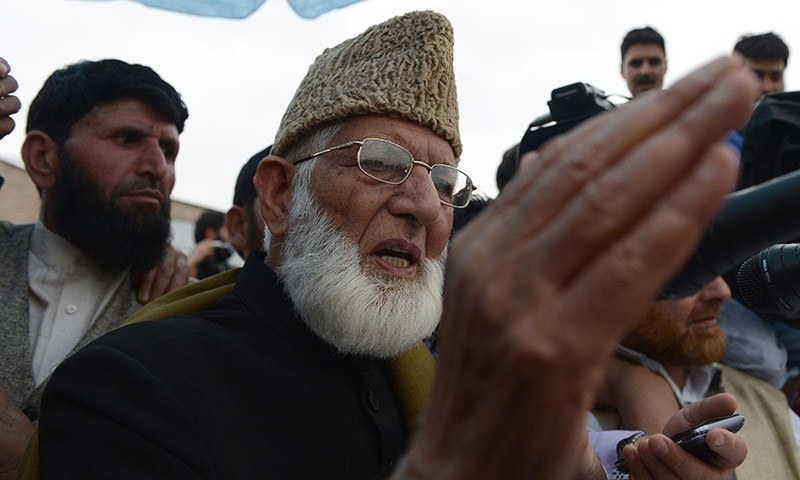
Speaking about his controversial memoir, Dulat divulged that the Indian government had on quite a few occasions paid for air fares, medical treatment and general upkeep of pro-Pakistan separatists like Syed Ali Shah Geelani.
He said India's spies had been in touch with everyone — separatists and militants alike.
Dulat also revealed that he had been in touch with one of India's most wanted terrorists and the leader of Hizbul Mujahideen Syed Salahuddin, who the ex-RAW chief said was ready to leave Pakistan and return to India.
Kashmir has been divided between India and Pakistan since the two countries gained independence in 1947. Both claim the territory in its entirety.
Although several rebel groups have been fighting Indian forces since 1989 for independence or a merger of the territory with Pakistan, street protests have become the principal mode of opposition to Indian rule. Armed encounters between rebels and government forces occur regularly.
Nuclear-armed neighbours India and Pakistan — bitter and sometimes bloody rivals since gaining independence from Britain in 1947 — have long traded accusations about RAW and ISI fomenting trouble in the vulnerable and unstable region.

Rangers have turned Sindh into an occupied province: Altaf

KARACHI: Criticising the ongoing targeted operation in Karachi, Muttahida Qaumi Movement (MQM) chief Altaf Hussain on Saturday alleged that the Rangers had turned Sindh into what he called an "occupied province", a press release on the party's website said.
“Sindh is burning and MQM workers are being treated like prisoners of war,” said the MQM chief, adding that that Sindh Chief Minister Syed Qaim Ali Shah's attitude in this regard had been irresponsible. He further lamented that Pakistan Peoples Party (PPP) Co-Chairman Asif Zardari's dealings with the MQM had taken a disappointing turn.
He said the PPP leadership's attitude was reflective of the fact that it did not care about the residents of the province.
The press release also said that Altaf had called Asif Zardari and Qaim Ali Shah to discuss the role of Rangers in Sindh but was unable to establish contact with them despite several attempts.

Rabita Committee holds emergency meeting

MQM's Rabita Committee condemned what it called the callous attitude displayed by Asif Zardari and Qaim Ali Shah.
An emergency meeting was called by the committee in London and Karachi to discuss latest developments.
A meeting was also called by MQM on sector and unit levels to discuss the current situation. The meeting is expected to decide the party's future course of action against PPP.
Meanwhile, Qaim Ali Shah said he had left a meeting to attend the MQM chief's call.
"I did talk to Altaf Hussain but he himself terminated the call after getting emotional during the conversation."