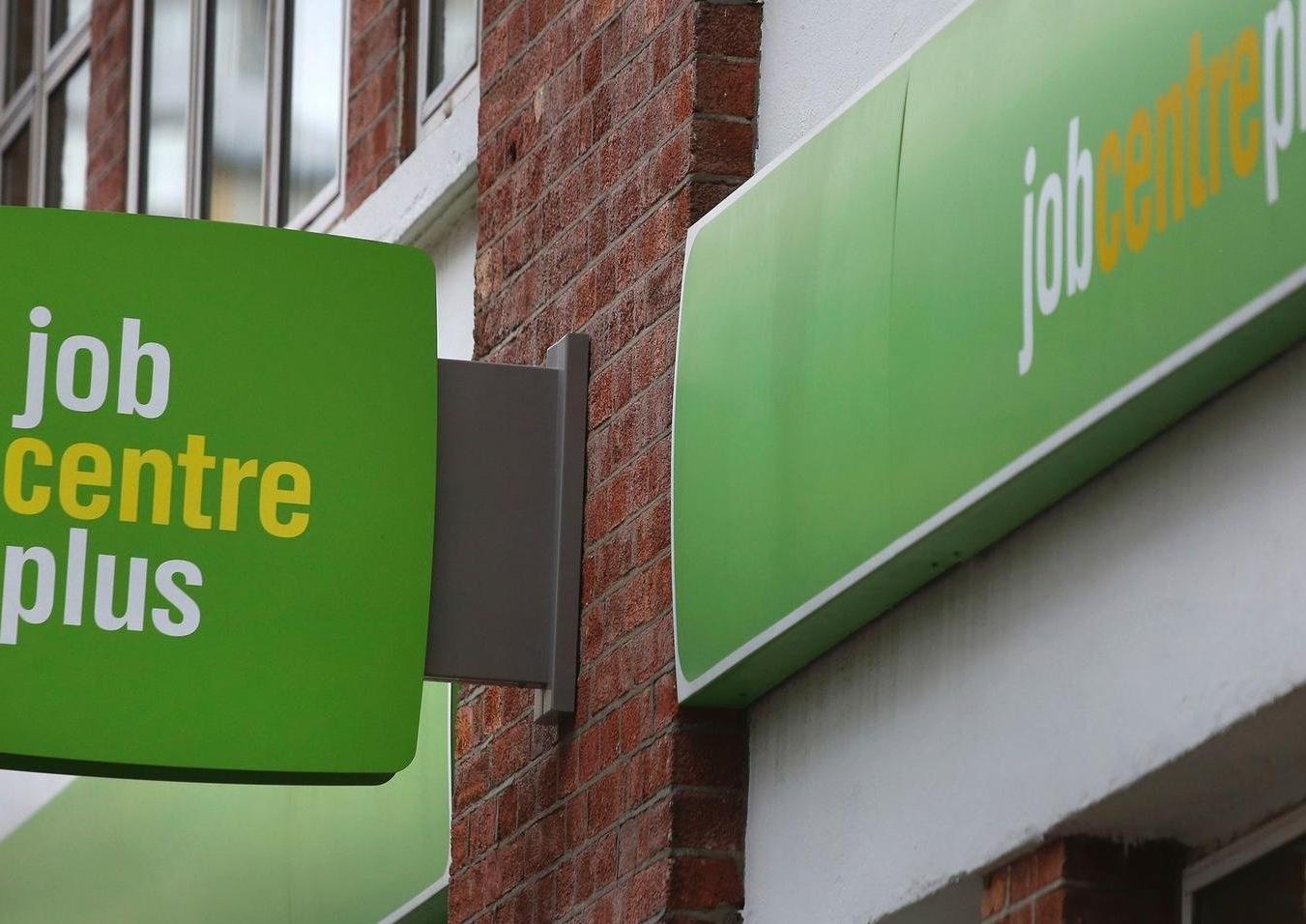
THE UNEMPLOYMENT PICTURE -- "New unemployment claims fall below 1 million for the first time in five months," by Rebecca Rainey: "New unemployment claims fell last week to 963,000, the Labor Department reported Thursday, the first time in months the figure has been less than 1 million. "An additional 488,622 laid-off workers filed for jobless aid under the new pandemic unemployment assistance program, created for those not traditionally eligible for unemployment benefits like the self-employed and gig workers. … In total, more than 25 million people are currently receiving jobless benefits, according to DOL." POLITICO THE LATEST IN BEIRUT -- "U.S. official: FBI to join Beirut explosion investigation," by AP's Sarah El Deeb: "[Undersecretary of State for Political Affairs David] Hale said the participation in the probe is one of the ways the U.S. is helping Lebanon in dealing with the aftermath of the drastic explosion. Hale arrived in Lebanon Thursday and is due to meet with Lebanese officials for the next two days." AP HEADS UP -- "Face masks with valves or vents do not prevent spread of the coronavirus, CDC says," by WaPo's Reis Thebault and Angela Fritz AP/LUMPKIN, GA.: "2nd ICE detainee in Georgia dies from COVID-19 complications": "A diabetic Costa Rican man in federal immigration custody has become the second detainee in Georgia to die from COVID-19 complications after being held at a detention center that has reported more than 150 coronavirus cases." AP WINTER IS COMING -- "Beset by Coronavirus, Health Authorities Brace for Flu Season," by WSJ's Jared Hopkins: "To reduce the pressure, drugmakers including AstraZeneca, GlaxoSmithKline and Sanofi are making about 200 million flu shots this year for shipment to doctors, hospitals and pharmacies, up 13% from last year and a record, according to the U.S. Centers for Disease Control and Prevention. … "The federal government is also launching a campaign encouraging people to get the shots, while drugmakers and pharmacies explore novel measures to ensure more people get vaccinated, like offering flu shots curbside." WSJ A RARE COVID SUCCESS STORY -- "On Native American Land, Contact Tracing Is Saving Lives," by NYT's Gina Kolata: "The coronavirus is raging through the White Mountain Apache tribe. Spread across a large reservation in eastern Arizona, the Apaches have been infected at more than 10 times the rate of people in the state as a whole. Yet their death rate from Covid-19 is far lower, just 1.3 percent, as compared with 2.1 percent in Arizona. "Epidemiologists have a hopeful theory about what led to this startling result: Intensive contact tracing on the reservation likely enabled teams that included doctors to find and treat gravely ill people before it was too late to save them. A crucial tool has been a simple, inexpensive medical device: an oximeter that, clipped to a finger, detected dangerously low blood oxygen levels in people who often didn't even realize they were seriously ill." NYT COVID CAMPAIGNING -- "Will Michigan Democrats Really Turn Out After a Virtual Campaign?" by Tim Alberta in Lansing, Mich.: "[Rep. Elissa] Slotkin is following every rule, taking every precaution, doing everything she can to reach voters without putting them in danger. It's a source of pride: Having reinvented on the fly, Slotkin's team is heading into the home stretch of 2020 with a creative if untested theory of how to wage a winning campaign in the middle of a pandemic. But it's also a source of tremendous uncertainty. … "Indeed, Slotkin won her seat by persuading many independent voters, not to mention a fair number of Republicans, to trust a Democrat to represent the district for the first time this century. The inability to stay on top of these 'persuadables' is the cause of incessant concern. But today, in Lansing, Slotkin is confronting the other political dilemma she must resolve amid Covid-19: how to turn out the party's base." POLITICO JACK HITT in WIRED: "One IT Guy's Spreadsheet-Fueled Race to Restore Voting Rights": "Numerous think tanks and voter groups have studied this problem of wrongly purged voters, typically after elections. But in a small town in Ohio, there is at least one man who is very much at battle stations, obsessed with fixing the problem before it happens. Steve Tingley-Hock is an IT guy who has long toiled in the trenches of database management, working the vast credit card data bank of American Express for years. "In his off hours, he has developed a unique hobby: scrutinizing state voter files. Last fall he had an opportunity to put these skills to a unique test. Early on in an Ohio purge process, he and other data analysts received the purge list. Deploying several basic data query techniques, he identified thousands of voters mistakenly headed for ejection. Now, armed with his work, voter rights groups in a handful of states are trying to plug these holes in the voter registration system—before hundreds of thousands of voters are drained from the rolls ahead of the presidential election." Wired VALLEY TALK -- "Facebook beefs up anti-misinfo efforts ahead of U.S. election," by AP's Barbara Ortutay in Oakland, Calif.: "Beginning Thursday, U.S. Facebook users who post about voting may start seeing an addendum to their messages -- labels directing readers to authoritative information about the upcoming presidential election. ... "Facebook began adding similar links to posts about in-person and mail-in balloting by federal politicians, including President Donald Trump, in July. These labels will link to a new voter information hub similar to one about COVID-19 that Facebook says has been seen by billions of users around the world." AP FOR YOUR RADAR -- "Kamala Harris and top Dems float college athlete pay as virus rages," by Juan Perez Jr. and Nolan McCaskill: "Advertised as a 'College Athletes Bill of Rights,' the Democratic outline of forthcoming legislation proposes paying student-athletes through revenue-sharing agreements with athletic associations, conferences and schools that make money off college sports. "The proposal also would allow athletes to pitch products or services for their own profit, provide them with "commensurate lifetime scholarships" and create enforceable health and safety standards that would include new financial assistance for sports-related injuries and illnesses." NEIGHBORS TO THE SOUTH -- "As U.S.-China rift grows, Mexico tries to lure American businesses to move operations closer to home," by WaPo's Kevin Sieff in Mexico City: "As tensions between the United States and China rise, and as the coronavirus pandemic is forcing some U.S. companies to rethink their far-flung supply chains, Mexico has a message for the world's CEOs: Move here instead. "The Mexican government calls it a 'relocation strategy' — a campaign to convince companies that they'd be safer bringing production closer to the U.S. market, to a country with a newly signed North American trade deal and a warmer relationship to the U.S. government. ... In attempting to convince firms to relocate from China, the Mexican government is emphasizing the value of its proximity to the United States. Officials are chasing some of the world's biggest companies, such as Apple, Google and Microsoft." WaPo CLIMATE FILES -- "New EPA Rules Could Raise Bar for Climate-Change Regulations," by WSJ's Timothy Puko: "The Environmental Protection Agency plans to use new methane rules to help set a higher bar for regulating other emissions that contribute to climate change, according to people familiar with the situation and an excerpt of the new rule. "The rules being adopted Thursday will rescind regulations for methane-gas emissions adopted in 2016, including ending requirements that oil-and-gas producers have procedures to detect and fix methane leaks in their systems. ... The agency is looking to adopt that same stance when it comes to regulations for other industrial pollutants, according to final draft excerpts of the methane regulations reviewed by The Wall Street Journal." WSJ SCOTUS WATCH -- "Abortion, transgender rights likely to land back before Supreme Court," by WaPo's Robert Barnes: "In the past week, lower courts have resurrected controversial abortion restrictions in Arkansas, stopped a Vermont program that disfavored students at religious high schools and ordered a Florida school district to change its policy banning transgender students from the restrooms of their choice. "All were based on the Supreme Court's decisions reached just weeks ago. And especially on transgender rights and abortion, they raise issues that seem to warrant the justices' continued attention." |