Crossovers from PPP

THE PPP has reached a point where a clutch of trained, skilled members are leaving it and going over to a party that appears to be the counter-force to the PML-N in Punjab. Many PPP stalwarts have crossed over to the Imran Khan camp in recent days. Many others are set to follow suit. Calls from within the PPP to remind them of the merits of loyalty seem to have had little effect on the outward-bound — those who are asked to be faithful to the party have someone closer to be sympathetic to: themselves. There are many explanations for this exodus; the most wanting in reason refers to it as another season of cleansing within the party. But this does not appear to be the usual load-shedding of the unwanted. These departures are a huge, if not fatal, blow to the PPP because at the moment it is struggling to stay relevant.
The situation in Sindh — the last PPP bastion — is an obvious influence on the defections in Punjab. But the truth is this could well have happened a long time ago. The loud, then fading, demands to have a party that at least pretended to stand and work towards a softer cultural milieu went unheard. They were left unaddressed by a PPP leadership which felt no qualms in transforming the party from a people-driven entity to one where decisions were imposed from above. Having quite spectacularly spent its capital, like unworthy heirs to a rich legacy, they are now content to tag along and act as appendages rather than seeking to take the initiative.
In their defence, they may say they had little chance of preventing the large-scale defections in a country where both the militants and the military have shown such a strong dislike for their politics — which doesn’t relieve the pain of witnessing the shrinking of political choices in the country. That erstwhile Bhuttoists can switch to whatever ideology is symbolised by Imran Khan is a reconfirmation — the umpteenth one — of the redundancy in the Pakistani political arena of the brand other than the one that is pursued by both the PML-N and PTI. Mr Khan and Mian Nawaz Sharif have often been described as two sides of the same coin, fighting for the same interest groups and duelling for the mantle of the leadership of a single group. If the PPP once offered a clear or nuanced alternative, now, depleted by the defections, it will find it hard to regain the ground it has lost. It is no coincidence that the defections are being blamed on a policy adopted by Asif Ali Zardari and executed by the likes of Manzoor Wattoo. It is a policy that puts emphasis on what happens not on the streets but inside the drawing rooms — from where Zulfikar Ali Bhutto had once pulled it out to place in the public domain.

Military operation in Khyber ends successfully

PESHAWAR: The military has successfully brought to a close a massive offensive in Khyber tribal region, effectively flushing out militants and blocking their crossing points on borders with Afghanistan, according to government and security officials.
But, the officials said, questions remained whether the military gains in the plains of Bara and upper reaches of Tirah valley could be sustained over a long period in the absence of administrative and auxiliary support systems.
The military formally brought Operation Khyber-2 to a close on June 15, significantly enough, on the first anniversary of Operation Zarb-i-Azb in North Waziristan.
Four days later, Army Chief Gen Raheel Sharif visited the troops in Tirah to take stock of the military offensive and the gains made in the nearly three and a half month long operation.
Knowledgeable sources told Dawn that the military had gained control of strategically important areas, depriving Tehreek-i-Taliban Pakistan and Lashkar-i-Islam of space in one of their toughest strongholds in the tribal regions. The military, the sources said, had also taken physical control of the three passes from Afghanistan into Tirah – Mzatal, Kandao Gharibi and Dramudrad situated at 7,300 to 9,300 feet altitude above the sea level.
Two of the passes have been physically taken over by the military, while the third is under direct fire power, thus putting an end to any movement through that pass.
But the success did not come easily. The military lost more than 50 men, including officers, in the second phase of Operation Khyber, while another 100 or so were wounded.
“It was not easy,” a security official said, requesting he not be named. “The area was heavily mined,” he said. “There were mines every 15 metres. The mining was done professionally.”
In one single fight for the control of Khyber Sanghar, called the Kidney Ridge by the military due to its shape, the military lost 11 men, including a major. “It was tough,” the security official said.
Officials say that 95 per cent of the area is now under firm government control and that militants hiding in the remaining pockets of Kachkol and Rajgal are being targeted through precision strikes. “There is no way they can get in,” they said.
It is still unclear whether the military will launch the third and final phase of Khyber-2 to seize control of Rajgal and Kachkol valleys or continue to target militants and their hideouts through aerial strikes till winters in the snow-bound area to make it inhabitable for them.
Tirah Valey lies astride the Pak-Afghan border sandwiched between the famous Tora Bora mountains and the plains of Bara which connects with the provincial capital, thus giving it a unique strategic position.
Bara in particular has had security fallout on Peshawar. But the Strategy & Analysis Wing of Khyber Pakhtunkhwa’s home and tribal affairs department in its quarterly report on militancy noted that there had been a marked improvement in the security situation in the provincial capital.
TIRAH: This narrow tunnel was used by militants to keep people detained by them.—Dawn
The total number of terrorist incidents in Peshawar division, it said, had dropped from 136 in the first quarter of 2014 to 44 in the corresponding period this year.
This made Tirah, a poppy growing area, the main conduit for smuggling of narcotics into Pakistan, turning it into a multi-million rupee trade that officials claim fed militancy.
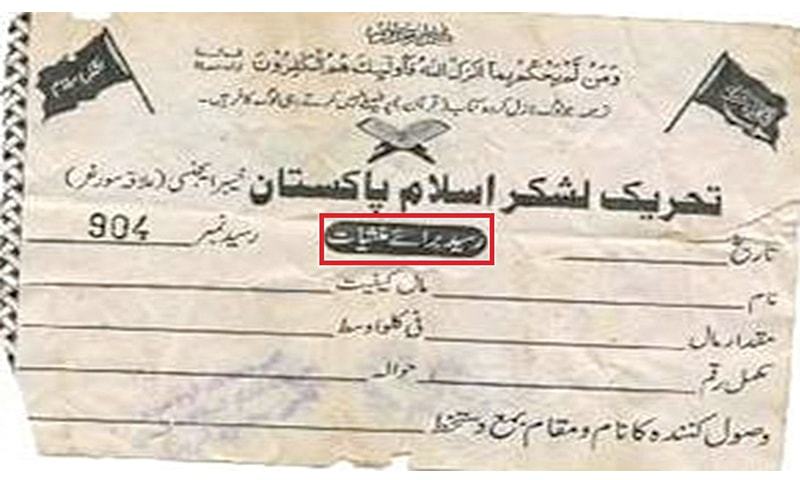
Thousands of kilograms of contraband drugs and printed receipts of toll tax on hashish by the outlawed LI bear testimony to the fact.
The officials say the control over Tirah has provided the government with an enormous opportunity to extend its administrative writ.
Where have the militants gone?
Tirah had become home to a motley crowd of local and foreign militants pushed out of their safe havens in Swat and rest of the tribal regions, sponsoring and directing attacks in Peshawar and other places.
Mangal Bagh and his fighters, said to be between 200 and 300 in number, have fled the area and are now believed to be in Naziyan district of Afghanistan’s eastern Nangrahar province just across Tirah. He, however, continued to air his evening speech through a powerful FM transmitter from his new home that could be heard in Bara, security officials said. The military’s efforts to jam his broadcast thus seem to have borne no fruit.
The TTP and Jamaat-al Ahrar which had sent reinforcements and formed an alliance with Mangal Bagh have also pulled back and moved to Naziyan.
The officials say that Mangal Bagh has now teamed up with the self-styled Islamic State group to take on the Afghan Taliban.
Seven hundreds of Mangal Bagh’s fighters have surrendered and are currently being schooled at a de-radicalisation centre called Sabawun, in Bara.
“This is the only tribal region where militants have surrendered in such large number,” another security official said.
Amr Bil Maroof, another organisation running a parallel administration in Bara, has also dismantled and surrendered its heavy weapons and its base has been taken over by the administration.
Challenges in sustaining gains in Tirah
One of the main challenges is to clear the remaining part of Tirah, including Rajgal and Kachkol valleys, to effectively put an end to any chance of the militants bouncing back.
But more than that, the major issue is the establishment of civil administration and law-enforcement apparatus in the area to take care of security once the military pulls back.
Government and security officials say the federal government has been approached for recruitment of third batch of Levy force of about 650 men to augment security along with the paramilitary Frontier Corps and Khasadars. This would be in addition to the 1,200 already raised. The Levies would be given a crash training course by the military, they said.
Opening up and mainstreaming of Bazaar Zakhakhel is another challenge for the political administration and security establishment.
The officials said that a summary for the establishment of a tehsil office in Tirah had already been sent to the government for approval. Dismantling of the pro-government organisations in the area would send out a clear signal that there would be no parallel administration, they said.

Pakistan, Sri Lanka reshuffle pack for Pallekele Test

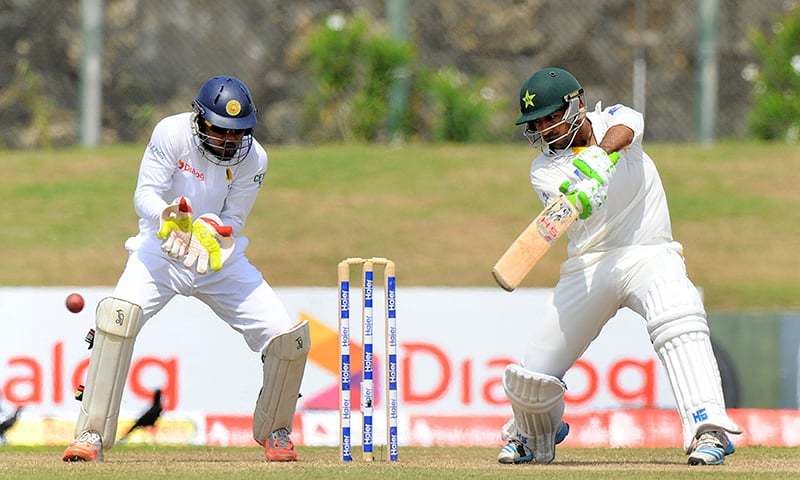
PALLEKELE: Pakistan and Sri Lanka will ring in several changes, most of them forced on them, in a bid to win the decisive third and final Test starting in Pallekele on Friday.
Both sides are pulling out all the stops to break the 1-1 deadlock after Pakistan won the first Test by 10 wickets and Sri Lanka responded with a seven-wicket victory in the second.
For the first time in 15 years since Kumar Sangakkara's debut in July 2000, Sri Lanka will go into a Test without either him or the retired Mahela Jayawardene in the ranks.
Sangakkara, Test cricket's leading current run-getter, committed himself to playing just two Tests against Pakistan and two more against India in August before retiring.
Sangakkara, who has 12,305 runs from 132 Tests, will be replaced at his pivotal number three position by another left-hander Upul Tharanga, 30, who played the last of his 19 Tests a year ago.
“It's a strange experience to be without Mahela and Sanga, but we have some good young players who are ready to step in,” vice-captain Lahiru Thirimanne told reporters on Thursday. “Upul has been around for a long time and understands the demands of Test cricket.”
Fast bowler Dushmantha Chameera, who suffered a side strain on his debut in the second Test in Colombo, will undergo a fitness test before he is picked for the crucial match. “Chameera is 50-50 for the Test,” said Thirimanne. “It is not yet certain if he will play.”
Sri Lanka are planning a three-man pace attack, instead of two as in the previous Tests, on a greenish Pallekele stadium pitch that should favour seam movement on the opening day.
“It's a good wicket for batting, but it does help the fast bowlers at the start,” said Thirimanne. “We may play three seamers and just one spinner.”
Veteran left-arm spinner Rangana Herath, who managed to take just two wickets in the first two Tests, is likely to be dropped, leaving young off-break bowler Tharindu Kaushal as the chief spin option.
If Chameera is unfit, seamer Suranga Lakmal will make his first appearance in the series to share the new ball with Dhammika Prasad and Nuwan Pradeep.
Pakistan are forced to make two changes, with pace spearhead Wahab Riaz ruled out because of injury and all-rounder Mohammad Hafeez not available since he has to undergo mandatory tests — on July 6 — after being reported for a suspect action in the first Test.
“At least we have 11 players to pick from,” skipper Misbah-ul Haq said on Thursday. “We have a lot of options and each one of them is focused on doing well for the country.”
Left-hand batsman Shan Masood is likely to replace Hafeez at the top of the order and left-arm seamer Rahat Ali could come in for Wahab, but Misbah indicated the team had not been finalised.
“We will field a combination that is good enough to win the match,” he said, adding: “With Jayawardene and Sangakkara not there, this is our best chance to beat Sri Lanka.”

Squads

Pakistan: Misbah-ul-Haq (capt), Azhar Ali, Ahmed Shehzad, Shan Masood, Younis Khan, Asad Shafiq, Babar Azam, Sarfraz Ahmed, Yasir Shah, Zulfiqar Babar, Junaid Khan, Imran Khan, Ehsan Adil and Rahat Ali.
Sri Lanka: Angelo Mathews (capt), Lahiru Thirimanne, Kaushal Silva, Dimuth Karunaratne, Upul Tharanga, Dinesh Chandimal, Kithruwan Vithanage, Jehan Mubarak, Kusal Perera, Rangana Herath, Dilruwan Perera, Tharindu Kaushal, Nuwan Pradeep, Dhammika Prasad, Dushmantha Chameera and Suranga Lakmal.

Pakistan must win next two matches or forget Rio Games

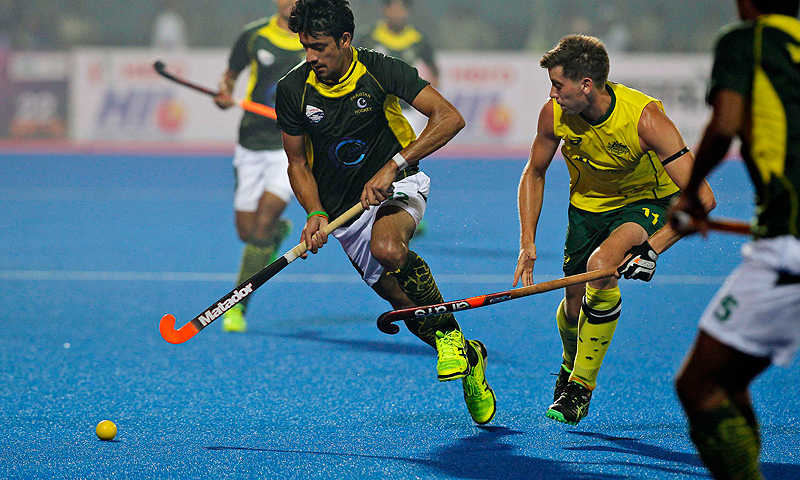
KARACHI: After suffering a 2-1 humiliaton at the hands of Great Britain in the quarter-final of the Hockey World League Semi-final at Antwerp on Wednesday, Pakistan plays Ireland in the classification match for the 5th-8th position on Friday.
According to information available here, Malaysia is slated to face France in another match for the 5th-8th position.
The winners of both the matches will be up against each other for the 5th-6th positions while the losers will fight for the 7th-8th spots on Sunday, the concluding day of the event.
The quartet comprising world champions Australia, world number five Great Britain, Asian champions India and European championship runners-up Belgium have already stormed into the last four.
Australia takes on Great Britain while India meets Belgium in the two semi-finals to be played on Friday.
Thursday was a rest day in the competition.
Once considered as a force to be reckoned with in field hockey, Pakistan now requires to win their next two fixtures in order to qualify for the 2016 Rio Olympics.
It is pertinent to mention that despite winning back-to-back silver medals in the Asian Games and Champions Trophy, Pakistan has been ranked 10th in the world, one rank below India.
Former Olympians have been quite critical of the team’s display in Antwerp and are keeping their fingers crossed about the fate of the greenshirts at the HWL event.

Pakistan have potential to win SL ODI series: Irfan

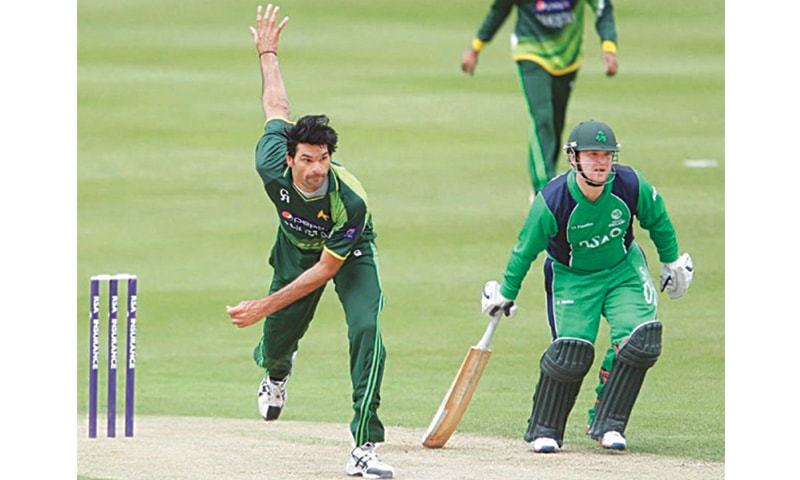
LAHORE: Fit-again Test paceman Mohammad Irfan reckons Pakistan have the potential to win the upcoming five-match One-day International series against Sri Lanka as he hopes to make use of the recent changes made to the limited-overs format of the game.
Speaking to reporters at the Gaddafi Stadium on Thursday after attending a rain-shortened training camp along with fellow players Sohaib Maqsood, Mukhtar Ahmed and Adnan Akmal, Irfan said he had worked hard to regain fitness.
“I’ve been working really hard during the three-month layoff,” said the lanky Irfan whose last ODI came against South Africa at the World Cup.
Irfan admitted that the injury to fellow fast bowler Wahab Riaz had hit Pakistan’s chances but hoped the side will get its act together and win the series in order to ease their qualification passage to the 2017 Champions Trophy.
“I hope Wahab returns during the ODI series,” he said about the pacer who suffered an injury to his hand during the second Test against Sri Lanka. “I think we have the potential to win the series.”
While Wahab remains doubtful for the ODI series, Irfan is likely to be selected in the squad which will most probably be announced on Friday.
And he’s hoping the recent changes to the game by the International Cricket Council (ICC), which he believes will be beneficial for fast bowlers, will help. “It will help the bowlers concede less runs and batsmen will have difficulty in slogging freely,” Irfan said.
The changes in the ODI rules see no batting powerplay from overs 15-40, five fielders allowed outside the 30-yard circle from overs 41-50 while all ‘no-balls’ and not just ‘foot faults’ will result in free hit.

US-Germany row over spying deepens

BERLIN: Chancellor Angela Merkel’s chief of staff asked the US ambassador for a meeting on Thursday to discuss the latest reports of alleged American spying on Germany and told him that German law must be adhered to, the German government said.
Chief of Staff Peter Altmaier invited Ambassador John B. Emerson to the chancellery, the government said, a move that formally fell short of summoning the ambassador.
It came after WikiLeaks published a list of German phone numbers on Wednesday that it claimed showed the US National Security Agency eavesdropped on senior German officials besides Ms Merkel.

Merkel’s office invites US envoy to discuss latest allegations


Mr Altmaier “made clear that abiding by German law is indispensable” and that any violations would be pursued, Ms Merkel’s spokesman, Steffen Seibert, said in a statement.
“Beyond that, the cooperation between German and American intelligence services that is essential for the security of our citizens is burdened by such repeated incidents,” Mr Seibert added.
He said that the latest report is being evaluated by German authorities.
Reports two years ago that the chancellor’s cellphone was monitored by the NSA caused diplomatic friction between Berlin and Washington. The latest list, which was partially redacted, reportedly contained phone and fax numbers used by the German economy and finance ministries, among others.
WikiLeaks also published two documents it claimed were summaries of conversations intercepted, one involving Ms Merkel and a second involving a senior aide, concerning the Greek debt crisis.
Some in Germany have taken the latest documents as proof that the US is also conducting economic espionage of allied nations.
Speaking to German daily Bild, the country’s finance minister chided the US for its apparent eavesdropping practices, but said his ministry used secure means of communication for sensitive conversations.
Wolfgang Schauble was quoted as saying on Thursday that he considered the US and its intelligence agencies to be less of a problem than those of other major powers.
German-US relations were badly strained after fugitive US intelligence contractor Edward Snowden in 2013 revealed widespread US foreign surveillance, although a probe into the alleged tapping of Ms Merkel’s mobile phone was dropped last month due to lack of proof.
The federal prosecutor’s office said on Thursday, however, that it was considering reopening an investigation into NSA activities in Germany in light of the new evidence.
While Mr Snowden alleged US spying on many European governments, his disclosures triggered particular anger in Germany where bitterness lingers over mass state spying on citizens by the Stasi secret police in former communist East Germany where the chancellor grew up.
Ms Merkel herself phoned US President Barack Obama over the 2013 revelations and in public told Germany’s traditional post-war ally and Nato partner that “spying between friends just isn’t on”.
Washington appeared to confirm that her phone had been tapped when US officials said it would not be a target in the future.
The US government has been keen to push past an unpleasant chapter in relations with Europe’s top economy to focus on trouble spots such as Ukraine, Iran and Greece, as well as the mooted TTIP transatlantic trade pact.
However resentment in Germany over the spying has festered, with media coverage of the issue unabated and a parliamentary probe ongoing.

Pakistan policy for UN General Assembly session discussed


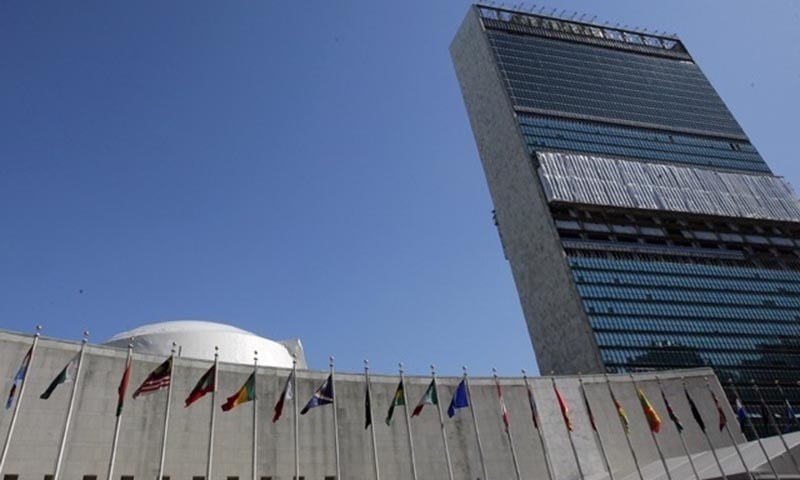
ISLAMABAD: Prime Minister Nawaz Sharif held on Thursday a preparatory meeting for the upcoming UN General Assembly session and other events planned on its sidelines.
The meeting was attended by Adviser on Foreign Affairs and National Security Sartaj Aziz, Special Assistant Tariq Fatemi and Ambassador to the United Nations Dr Maleeha Lodhi.
The meeting, an official said, discussed proposals for making Pakistan’s participation in the UNGA session that coincides with 70th anniversary of the founding of the world body more meaningful. The premier would lead Pakistan’s delegation at the UNGA in September.
A number of other summits, including the one on peacekeeping that Mr Sharif would co-chair with US President Obama, are planned on the sidelines of the UNGA. Mr Sharif would also be attending a summit hosted by Chinese President Xi Jinping on South-South cooperation and another on the Post-2015 Agenda.
Leaders at the Post-2015 Agenda would adopt the Sustainable Development Goals.
Speaking on this occasion, Mr Sharif said: “Pakistan has always played an active role in the UN and should continue to be in the forefront of all UN activities and debates.”
Meanwhile, at the weekly FO Briefing, Spokesman Qazi Khalilullah said: “Pakistan’s Permanent Representative in New York (Dr Maleeha Lodhi) is in Islamabad for routine consultations. Broad range of issues of Pakistan’s interest at the United Nations is being discussed in these consultations.”
Media reports had earlier suggested that Dr Lodhi had been called for consultations over a planned move to raise the issue of Indian involvement in subversive activities in Pakistan.
Responding to a question about Pakistan government’s request to UK for accessing the information quoted in a BBC report regarding alleged Indian funds for of the Muttahida Qaumi Movement, the spokesman said British authorities had not responded as yet.
“The government of Pakistan is in touch with British authorities with a view to seeking information and facts of the report as its contents are of vital significance to the state of Pakistan. So far, to the best of my knowledge, we have not received any response,” Mr Khalilullah said.
On the reported sentencing of self-described defence analyst Zaid Hamid in Saudi Arabia, the spokesman said the Pakistan embassy had sought factual position from the Saudi government, but there has been no response as yet.
“Our embassy has officially requested the host authorities to convey factual position in view of media reports about the sentence given to Mr Zaid Hamid, provide consular access and intimate charges against him. Response of the concerned authorities of Saudi Arabia is awaited,” he said.
Zaid Hamid was arrested in Saudi Arabia almost three weeks ago for allegedly criticising the Saudi government for the war in Yemen.
There have been unconfirmed reports that Saudi authorities have sentenced Mr Hamid to eight years in jail and at least 1,000 lashes.
Commenting on media reports which quoted Afghan President Ashraf Ghani as saying that “Pakistan was in an undeclared war with Afghanistan”, Mr Khalilullah said the reported remarks were incorrect.

Senate committee turns down draft Credit Bureau Bill


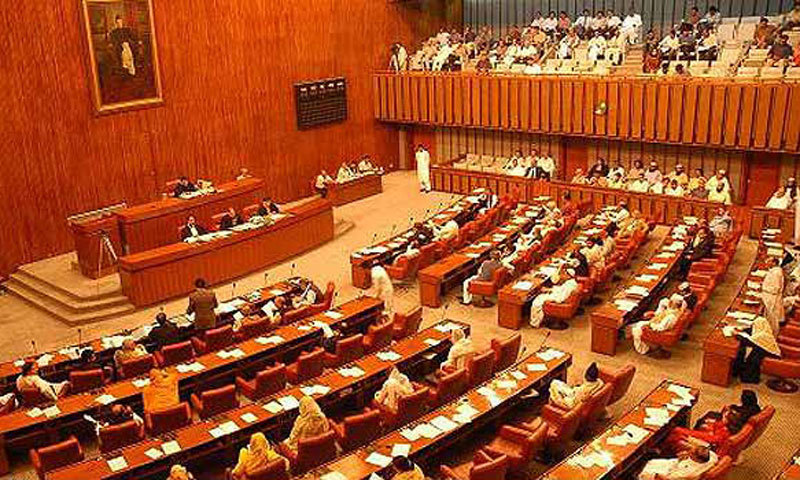
ISLAMABAD: The Senate Standing Committee on Finance and Revenue turned down on Thursday the draft Credit Bureau Bill, 2015, ordered a probe into a botched attempt for the sale of Heavy Electrical Complex and summoned the National Accountability Bureau over investigation into privatisation of the Muslim Commercial Bank.
A meeting of the committee, presided over by Salim H. Mandviwala, directed the ministry of finance and the State Bank of Pakistan to resolve the issue of payments to a fresh consultancy firm that had provided services to a state-run firm, but did not get paid.
The committee was almost unanimous that the draft Credit Bureau Bill proposed by the SBP and consequent formation of Credit Information Bureau (CIB) was unacceptable in its current shape as repeated assurances by Governor Ashraf Mehmood Wathra and Finance Secretary Waqar Masood could not satisfy parliamentarians that the law would not be used for political victimisation.
The meeting, therefore, decided to return the bill, along with proposed amendments to the draft law, to the Senate for discussion as a majority of the senators called for strengthening the SBP and its independence and creating another department within the ambit of the regulator to look after the affairs of credit bureaus.
The finance secretary and the SBP governor requested the committee to clear the bill, otherwise it would lapse in the next few days and the entire process would have to be initiated afresh. But members of the committee were not ready to approve what they termed a faulty piece of legislation that was going to affect rights of millions of people just because to ease workload of a few bureaucrats without satisfying their collective wisdom.
Mr Mandviwala said the committee had suggested some amendments and if the government was ready to accept them and bring an amended draft, it would be ready to approve the bill within the deadline.
After discussing the proposed amendments with his legal team, the SBP governor said he would not accept one amendment because it would negate the entire process. “We will not agree to the amendment that the SBP should verify each report of the CIB” which would be set up in the private sector after approval of the proposed law because it would require establishment of another supra body.
Mr Wathra said out of 126 countries having credit bureaus, CIBs were operating only in four countries in the public sector.
The finance secretary also requested the committee to approve the bill without any amendment as any change at this stage would require reprocessing the law, which has already been approved by the National Assembly.
Kamil Ali Agha said that the committee should reject the bill if the government was not ready to accept amendments proposed by the senators. All other members of the committee agreed.
Another member said that the bill involved political elements and could be used for political victimisation. He also questioned the need for giving CIBs to the private sector. Mr Mandviwala said that no-one was in favour of passing the bill in its current form.
The committee constituted a sub-committee, headed by Mohsin Leghari, to thoroughly investigate the privatisation transaction of the HEC because members of the committee were not satisfied with the explanation given by the chairman of the Privatisation Commission, Mohammad Zubair.
The members said the company was disqualified because its cheque was dishonoured and not because of the due diligence process carried out by the privatisation commission. There must have been some serious lapses, otherwise the company that was registered after the HEC sale process was initiated should not have qualified the bidding process.
This showed that due diligence was totally bypassed and “even my drivers could have qualified”, said Mr Leghari.
Mr Zubair said that some HEC board members might have shared information with the company because it was public information after the decision of privatisation had been taken, but added that he was not privy to information-sharing.
In reply to a question, the SBP governor said there was a standard practice in various countries that the parent company made investments abroad through its subsidiaries, citing the example of HEC.
A participant said the Cargill Holdings International had disowned Cargill Pakistan, but even this did not arouse suspicious here.
The committee decided to summon the NAB after the SBP governor informed it that after the decision of the privilege committee, 39 files pertaining to the MCB’s privatisation were handed over to the accountability bureau.
But the NAB returned the files with comments that there was no decision in the minutes of the committee to investigate MCB’s privatisation, he added.
The committee deferred discussions on KASB Bank’s takeover because the matter was in court.

Makers of 52 items bound to give FBR production data


ISLAMABAD: The Federal Board of Revenue (FBR) has bound manufacturers of 52 major items to declare actual monthly production data for determining sales tax.
According to the SRO494 of 2015, the manufacturers will now have to file details of production data with the FBR. Several statutory regulatory orders (SROs) were issued on Thursday to give effect to procedural and other decisions in respect of various sectors.
The 52 major commodities/items include sugar, tea, cigarettes, beverages, paper, board, chemicals, caustic soda, toilet soap, flakes and detergent, industrial gases, LPG, natural gas, ceramic tiles, cement, refrigerators, air conditioners, deep freezers, paints/varnishes, biscuit, all kinds of motor vehicles, juices, yarns, petroleum products, iron and steel products, pesticides, fertilisers, storage batteries and power transformers.
Further amendments were made in Sales Tax (Special Procedures) Rules, 2007. Chapter 9 on processing of refund claims filed by the cotton ginners is proposed to be omitted, as it has become redundant since the ginned cotton is no more zero-rated.
To rationalise the present concessionary regime of sales tax rates on the steel sector, the following measures are proposed: sales tax recovered through electricity bills from steel melters and re-rollers has been raised from Rs7 to Rs9 per unit; for ship-breakers, the rate is enhanced from Rs6,700 a tonne to Rs8,000 a tonne of ship plate.
Other sales tax rates for melters and re-rollers using natural gas for their own generation or those paying sales tax on a mill size basis shall be enhanced proportionately. Adjustable sales tax on import at the rate of Rs5,600 a tonne of re-meltable scrap is to be continued at the same rate.
The sales tax on local scrap of these PCT headings is also proposed to be subjected to the same rate of Rs5,600 a tonne. The import of compressor scrap, now classified under a new PCT heading, 7204.4940, is subjected to an un-adjustable sales tax at the rate of Rs5,600 a tonne. Wholesaler-cum-retailers falling under Chapter 13 are given waiver from provisions of section 73 of the Act and allowed to issue tax invoice in respect of specified goods subject to extra tax.
The FBR will only grant sales tax exemption to any entitled organisation or agency under grants-in-aid, which would bring original exemption orders from Economic Affairs Division (EAD). The FBR has issued a new procedure for the organisation or agency under grants-in-Aid availing sales tax exemption through a notification issued on Thursday.
Under the amended rules, any entitled organisation or agency that wants to make exempted import or taking exempted supply from a registered person shall make application to the officer of Inland Revenue having jurisdiction to issue exemption certificate to this effect, provided that the application shall be accompanied by an exemption order in original issued by EAD on the specified format.
Through SRO485 of 2015, the companies, recipients of advertisement services and registered exporters are now required to deposit the amount of sales tax withheld/to be withheld by 15th of each month following the month in which purchases were made (accrual basis).
Earlier, the withholding tax was to be deposited after payment to supplier. The amendments were made in sales tax special procedure (Withholding) Rules, 2007.
Presently, withholding agents are required to deposit sales tax to be withheld by them along with the return for the tax period (month) in which they make payment for the purchases to their suppliers. On the other hand, they adjust input tax on such purchases immediately. It is provided that except for the government sector withholding agents, all other withholding agents should deposit the sales tax amount to be withheld along with the return for the tax period in which purchase is made.
The petroleum dealers of HSD (high-speed diesel) and petrol are excluded from purview of withholding. Exclusion to products like mild steel products, paper in rollers or sheets, plastic products, including pipes, is withdrawn. However, people in the steel sector paying sales tax under special procedure, except those who pay sales tax ad valorem, shall continue to be excluded from provisions of withholding tax.
Through another SRO491 of 2015, the minimum value of assessment of locally produced coal has been enhanced from Rs1,000 a tonne to Rs2,500.
An amendment was made in SRO550 of 2006, through SRO489 of 2015, under which the FBR excluded Federal Excise Duty (FED) on air travel service and carriage of goods by air service from sales tax mode. It means input tax adjustment against these services will not be available.
In SRO1125 of 2011, concessionary rate of 2pc, 3pc and 5pc were applicable to five export-oriented sectors — textile, leather, carpet, surgical and sports goods. The rate of 2pc is being enhanced to 3pc.
The said notification is also being revamped through another notification, SRO486 of 2015, and simplified without disturbing the existing provisions (except withdrawal of reduced rate on maize starch) to facilitate the registered persons as well as field officers. Value-addition tax on commercial imports of these sectors at the rate of 2pc is being reduced to 1pc.
The FED SROs that were rescinded included SRO778 (I) 2006; SRO474 (I) 2009; SRO802 (I) 2009; and SRO81 (I) 2010. These SROs are now part of the schedule of the FED Act.
The sales tax SROs which either have been transposed to the schedules of the Sales Tax Act, 1990 or are redundant included: SRO208 (I) 1998; SRO397 of 2001; SRO77 of 2004; SRO433 of 2005; SRO1007 of 2005; SRO69 of 2006; SRO313 of 2006; SRO880 of 2007; SRO76 of 2008; SRO408 of 2012; SRO460 of 2013; SRO657 of 2013; SRO572 of 2014; SRO84 of 2015.

Police save Christian couple from 'blasphemy' mob near Lahore

LAHORE: Police saved a Christian couple from a mob who were attempting to lynch them for allegedly committing blasphemy, and later arrested a cleric for inciting the violence, a senior officer said Thursday.
The incident, which took place in the village of Makki in Punjab on Tuesday, represents a rare successful intervention by authorities in a country where even unproven allegations of blasphemy can result in a bloody death at the hands of vigilantes.
Sohail Zafar Chattha, the district police chief, told AFP the illiterate Christian couple had obtained an old panaflex advertisement awning which contained the names and slogans of various colleges, which they were using as a mat to sleep on in their home.
Arabic inscriptions, allegedly from the Holy Quran, were found among the colleges' slogans, leading one local barber as well as two clerics to accuse the couple of committing blasphemy.
“Muslims of the town gathered there and dragged the poor couple who didn't know what they had done. They were being beaten to death,” Chattha said.
“Police intervened in time and rescued the couple from the mob, who were later shifted to Lahore and were handed over to the elders of Christian community,” he later told AFP.
Police have arrested one of the clerics while the other and the barber remain at large, he said. Some residents interviewed by the police said the barber may have been interested in obtaining the couple's house.
Tough blasphemy laws, which carry the death sentence for insulting the Prophet Muhammad(PBUH), are often invoked against minorities and the poor by those wishing to settle personal scores, according to rights groups.
Nadeem Anthony, a Christian human rights lawyer, hailed the police action.
“It is a positive development that the police is taking its duty seriously and protecting the accused in such cases,” he said, adding he could recount three other instances where authorities had stepped in in time.
“If the state and its organs continue to perform their duties, the elements who take the law into their own hands will be discouraged,” he added.
Christians, who make up around two percent of Pakistan's mostly Muslim population of 200 million, have been increasingly targeted in recent years, by both mob violence and militant attacks.
Bonded labourer Shehzad Masih and his pregnant wife Shama Bibi were beaten by a mob of 1,500 people then thrown into a lit furnace last year in a crazed reaction to rumours they had thrown pages of the Quran into the garbage.

Political ‘reverse swing’ forces Kaptaan to rearrange his field

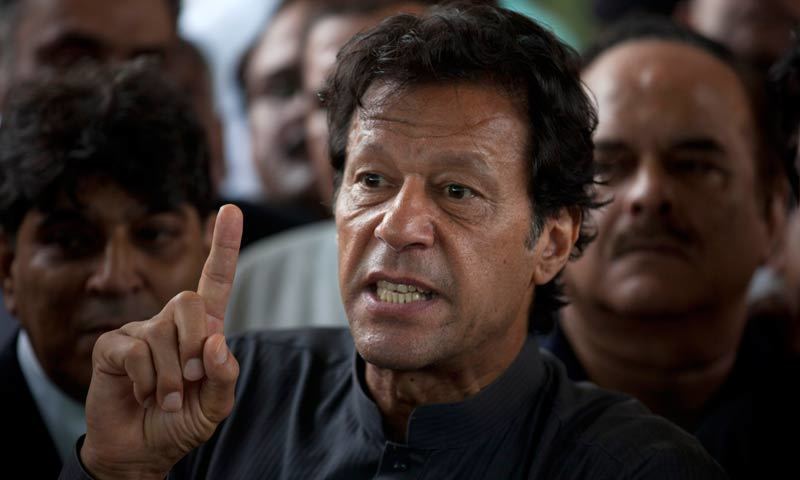
FOR some time the Kaptaan has been rearranging his field. This week he publicly, and painfully, admitted to an adoring Pakistan Tehrik-i-Insaf (PTI) crowd in Lahore that the reason was the reverses the party suffered in its recent political battles. Imran Khan lamented at a reception that PTI workers threw for him that party’s city chapter was divided in five factions.
“With this kind of division within our ranks, I don’t think PTI needs any opposition from the ruling PML-N to defeat us,” he told the workers, recalling how the infighting resulted in PTI’s humiliating drubbing at the hands of PML-N in recently held cantonment boards elections.
Party officials tried to burnish his pain as “the beauty of democracy” within the PTI, but intra-party wrangling permeate the party at all levels, a fact which worries the Kaptaan - and fuels his fighting spirit at the same time.
Since it is the age of image more than ideals, the adroit cricket hero-turned politician started rearranging his field with the PTI’s media section, which was no exception to the damaging bickering in the party. In the new scheme of things, Naeemul Haq, has been installed information secretary as chief mouthpiece for the party. For many in the PTI the change was long overdue, and reflected in the decreased visibility of the flamboyant Dr Shireen Mazari in the media.
And Mr Haq, who succeeded her as PTI’s chief spokesperson in the last week of May, is seen making extra effort to develop good rapport with the media corps. One aspect of his job he seems really focusing upon is to remain accessible to beat reporters all the time.
A former banker, who came close to Imran Khan in London during his cricket playing days, Mr Haq cut his political teeth with Tehrik-i-Istiqlal. But as a founding member of the PTI he has stood by Imran Khan through thick and thin, starting as chief staff officer to the chairman, handling all his personal and political affairs.
Though, after the reshuffle, Dr Shireen Mazari alone can speak on behalf of PTI chairman, when required, for all practical purposes Mr Haq is the new face of the PTI in the media.
However, the firebrand Dr Mazari has not eclipsed forever. She might even be heard more as she has been assigned the role of chief whip of the PTI in the National Assembly. Dr Arif Alvi who had that role before her, has been designated chief organizer of the party in Sindh.
Several PTI leaders told Dawn in background discussions that Dr Mazari, unfortunately, couldn’t create space for herself, both within the PTI and the media, as chief spokesperson for the party. “Every second person who matters in the top leadership was unhappy with her performance,” remarked one PTI official while others merely expressed “reservations” about her performance or complained about “her inability” to project them in the media.
Still others explained that since the PTI, unlike other political parties, has huge presence on social media, “All mainstream PTI leaders want to have their regular coverage, which makes the job of information secretary really challenging,” intoned one off the record.
This lust for publicity is reflected in the fact that many senior party leaders have their own focal persons who keep them “active on social media” round-the-clock.
There are others in the PTI who argue that Dr Mazari’s habit of picking sides inside the party led Imran Khan to change her portfolio. According to more than one personal accounts shared with Dawn, it was Dr Mazari who earlier this year successfully managed removal of Omar Cheema as spokesperson for the PTI chairman within days of his appointment, and wrested the charge which she held additionally to that of information secretary.
Other issues which contributed towards her displacement from the office of information secretary was her unavailability to media. On many occasions, media persons complained to Imran Khan that she did not take their calls, although Dr Mazari claimed she always responds to text messages.
A senior PTI leader confirmed to Dawn receiving such complaints. “With 24/7 media coverage, the task for the information secretary has become very, very challenging – one that demands to be pro-active in real time.”
However, people close to Dr Mazari feel that having been actively associated with media for considerable time, and with her experience of think tanks, no body suited better than her to handle the media, notably explaining party positions on complex policy making decisions. She fell a victim to what PTI Chief himself had expressed on occasions that the party is suffering from a kind of internecine strife, a supporter of Dr Mazari argued.
Welcome Mr Haq to the hard task of keeping everyone happy in the mad mad world of image building!

PPP decides to change Punjab leadership in phases


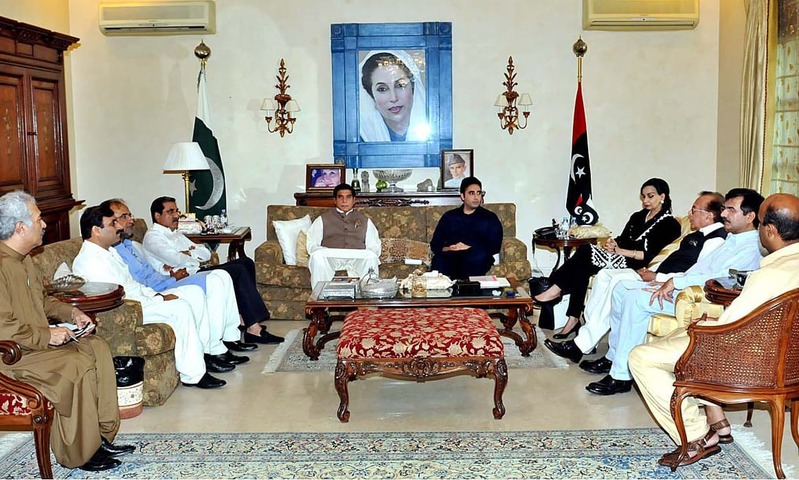
KARACHI: PPP Chairman Bilawal Bhutto Zardari has asked the party’s leaders in Punjab to establish direct contact with people and prepare effectively for the coming local government elections because the party has decided to field its candidate in every constituency.
The PPP chief issued the instructions while presiding over a meeting of leaders from Punjab at Bilawal House here on Thursday amid reports that after the defection of its two prominent leaders – Samsam Bokhari and Ashraf Sohna – to the Pakistan Tehreek-i-Insaf, more disgruntled leaders are considering to join other parties.
The meeting discussed political and organisational matters of the PPP Punjab as well as the overall political situation in country.
It was attended by former prime minister Raja Pervez Ashraf, PPP Punjab President Manzoor Ahmed Wattoo, former governor and party’s South Punjab President Makhdoom Ahmed Mehmood, Qamar Zaman Kaira, Senator Sherry Rehman, Firdous Ashiq Awan, Nadeem Afzal Chan, Tanveer Ashraf Kaira, Shaukat Basra and Jameel Soomro.
The meeting decided to make electoral alliance in every district for the local government elections in consultation with the party’s district leadership. It also decided to contact the disgruntled leaders. All matters would be supervised by Mr Bilawal Bhutto.
The party decided to launch a membership campaign in Punjab after Eid and changes in the party leadership of the province would be made in consultation with the Central Executive Committee. The changes in office-bearers will be made in phases – from wards to the provincial level. For local bodies’ elections, a workers’ convention will be convened and a ‘contact people campaign’ will be launched next month.
The Punjab leaders said the PML-N government did not fulfil the promises it had made before the general election and people were disappointed. They said that it was the right time that the PPP leadership gave some hope to the people of Punjab as they were looking towards Mr Bilawal Bhutto with great expectations.
The PPP chairman said such consultative meetings should be held at every level to strengthen the party.
According to sources privy to the meeting, the party reviewed the situation arising out of the defection of some of its leaders and the chairman asked the PPP Punjab chief to submit a detailed report on the matter at the next meeting.
The sources said the PPP chief would pay a detailed visit to Punjab this month.
Mr Bilawal Bhutto offered condolences to Firdous Ashiq Awan on the death of her brother.
Meanwhile, Senior Minister of Azad Kashmir Chaudhry Yaseen also called on PPP chairman and discussed with him issues relating to the party in AJK.

Wrong map: court moved for case against CM Punjab

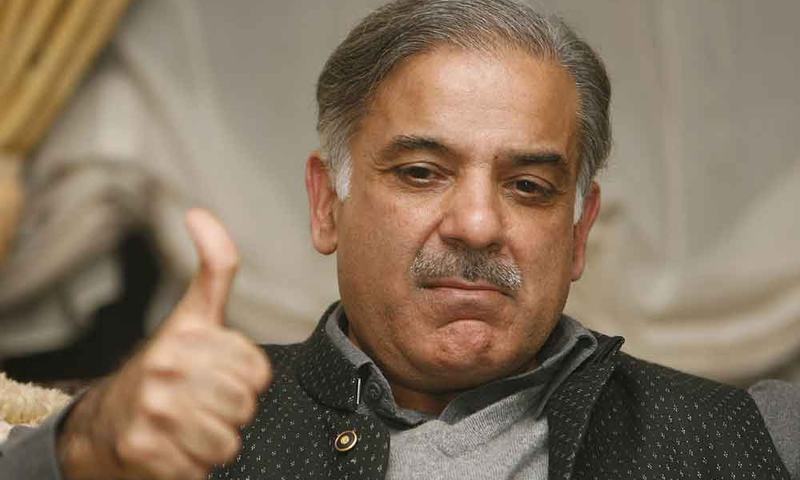
LAHORE: A sessions court on Thursday issued a notice to the capital city police officer (CCPO) on a petition seeking registration of a case against Punjab Chief Minister Shahbaz Sharif and others for publication of ‘wrong map’ of Pakistan in Class-VIII geography book.
Advocate Rizwan Haider filed the petition and told the court that he had submitted an application to the CCPO for registration of a case against the chief minister and other authorities of the school education department for publishing a wrong map of the country in text books of Class-VIII.
He stated the CCPO refused to entertain the application while the offence committed by authorities was of serious nature and amounted to misguiding and spoiling the innocent minds of new generation.
He said the map published in geography books showed Saraikistan and Hazara as two separate provinces which was a gross violation of the Constitution.
He asked the court to direct the CCPO to lodge an FIR against the respondents.
The court sought a reply from the CCPO by July 7.

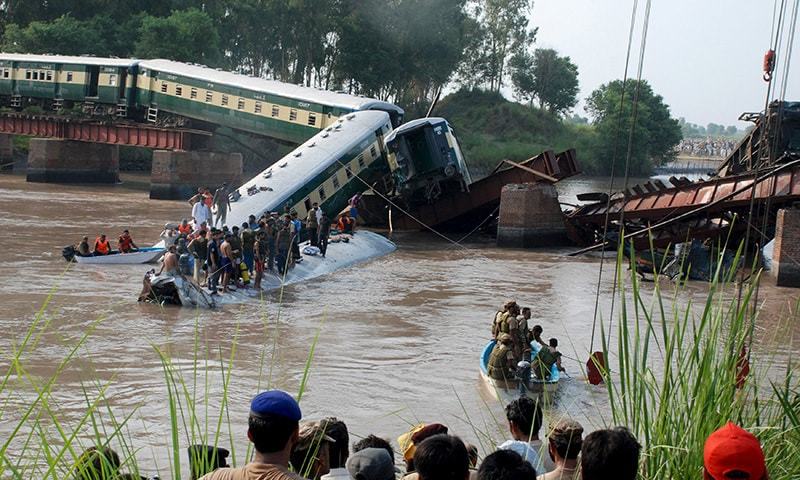
19 die as train carrying army men falls into canal near Gujranwala


GUJRANWALA: At least 19 people, including four army officers, were killed when three bogies of a special train carrying army officials fell into a canal and one other was derailed as a railway bridge collapsed near Gujranwala on Thursday.
A statement issued by the Inter-Services Public Relations (ISPR) said 14 dead bodies had been recovered from the site of the incident, while divers were searching the canal for five more dead bodies.
The deceased include Pakistan Army Engineering Battalion Unit Commander Lt. Col Amir Jadoon, his wife and two kids, Lt. Col Rashid, Major Adil, Lieutenant Kashif, Constable Islam, Lance Naik Zafar and staffers Babar and Aslam.
4 bogies of special train carrying mil troops to Kharian fell over bridge near Jamke Chattha in Canal. Rescue underway.Casualties expected
Update:Initial investigation,Railway Bridge collapsed.shaheed confirmed 12 including Comd of unit,Lt.col Amir.8 bodies found.Rescue contnues
A relief train, carrying technical and medical staff, has been sent to the spot from Lahore, while two helicopters and other rescue teams have started relief operations.
According to government officials, as many as 80 affected passengers have been rescued. Injured passengers have been shifted to the Combined Military Hospital (CMH), Gujranwala.
The special train was heading to Kharian from Pano Aqil. According to sources, the train was carrying army personnel who were travelling for a military exercise.
Local residents, divers and army personnel have been engaged in rescue operations while all railway traffic has been disrupted on the route.
The pre-partition bridge that collapsed as the train was passing over it was reportedly in a dilapidated condition.
Meanwhile, Prime Minister Nawaz Sharif has expressed concern on the train accident in Gujranwala. He directed to mobilise all resources to rescue the injured and restoration of the track.

COAS attends funeral services of the deceased

COAS Gen Raheel Sharif attends funeral prayers of deceased army men. -DawnNews screengrab
The Chief of Army Staff (COAS) Gen Raheel Sharif on Thursday night attended the funeral services in Gujranwala Cantonment of army men and others who died in a train accident in the noon.
The army chief also visited the Combined Military Hospital (CMH) Gujranwala where he met the people injured in the accident and inquired about their health, said a statement issued by the ISPR.

Bridge was not in a dilapidated state: DGPR Railways

The railway bridge which collapsed near Gujranwala on Thursday and led to the deaths of at least 19 people, was in a completely fine condition and sufficiently strong, claimed the Director General Public Relations of Pakistan Railways (PR) Abdul Rauf Tahir while talking to DawnNews.
Tahir said all railway bridges, including the one near Gujranwala, were thoroughly examined in January and this particular bridge was deemed perfectly fit for railway traffic.
He said about 90 minutes prior to the incident, which took place at around 12 noon, the train on Rawalpindi-Karachi-Rawalpindi passed over the same railway bridge "safely in full speed".
Tahir further said it was evident from the footage being shown on TV channels that bridge was not in rundown condition as the pillars of the bridge still stand erect.
Tahir said PR had formed an investigation team to probe the incident and it was likely that the team would probe alongside intelligence agencies.

Final report of train accident in 72 hours: Saad Rafique

Federal Minister for Railways Khawaja Saad Rafique said investigation to ascertain facts behind the train accident was under progress and the final report of the accident will be compiled within 72 hours.
He was talking to media at the site of the accident near Gujranwala on Thursday.
Rafique said the condition of railway bridges was checked four times a year.
Rafique had earlier said that so far no evidence of terrorism has been found. But he did say the possibility of sabotage could not be ruled out in the tragedy.