Misbah signs for Barbados in Caribbean Premier League


Pakistan’s Test captain Misbah-ul-Haq has replaced Shoaib Malik in the Barbados Tridents squad for the team's remaining games at the 2015 Caribbean Premier League (CPL).
The reason behind Malik’s exclusion from the CPL is a possible one-day international call up for Pakistan’s upcoming series against Sri Lanka.
Though the Pakistan Cricket Board (PCB) is yet to announce its ODI squad for the series, a CPL press statement said that Malik had been selected.
“Shoaib has been fantastic in the CPL so it’s a shame to lose him, but we’re delighted that he’s back in the Pakistan squad and we wish him every success in the upcoming series,” a report published by cricinfo.com quoted Tom Moody, the CPL director, as saying.
“Misbah is one of the most respected cricketers in the world, and we’re sure he’ll be an excellent addition to the Tridents squad.”
Misbah has previously played for St. Lucia Zouks in the CPL. Misbah’s Twenty20 record is also impressive; having featured in 116 matches, he has scored 2,635 runs at an average of 36.09, which includes a century and 10 half-centuries.

Champions Trophy: Zimbabwe tri-series annoys Bangladesh


DHAKA: Bangladesh has criticised the current scheduling system in international cricket as a new tri-series in Zimbabwe threatens their qualification for the 2017 Champions Trophy.
Bangladesh stunned India 2-1 last week and were celebrating their qualification for the eight-team tournament in England after their maiden ODI series victory over their mighty neighbours.
The victory meant Bangladesh, who blanked Pakistan 3-0 in the previous home series, rose to seventh place in the latest ODI rankings with 93 points, ahead of West Indies (88) and Pakistan (87).
Top seven sides and hosts England will compete in the tournament with a Sept 30 cut-off date to determine the rankings of the teams.
Bangladesh's celebrations, however, proved a bit premature when West Indies, previously not scheduled to play ODIs before the cut-off date, on Saturday announced the Zimbabwe tri-series, also involving Pakistan, in August-September.
Pakistan also get a chance to improve their ODI rankings in the five-match series against hosts Sri Lanka from July 11.
“The whole system has gone wrong ever since the ICC stopped following the FTP and let the boards deal bilaterally,” Dhaka Tribune quoted Bangladesh Cricket Board (BCB) director Jalal Yunus as saying.
“This has created loopholes I believe. I don't support this. This is not healthy competition,” added Jalal.
Bangladesh will now have to win at least one of the three ODIs in the home series against South Africa next month to secure their Champions Trophy place and Jalal was confident the Tigers can do it.
“I believe we still have the chance to keep our place intact in the Champions Trophy. We just need to perform in the ODI series against South Africa,” he added.

13 suspected militants killed in Balochistan's Awaran


QUETTA: At least 13 suspected militants were killed during an exchange of fire with Frontier Corps (FC) personnel in Balochistan's Awaran district on Tuesday morning.
FC Spokesman Khan Wasey said security forces launched an operation against miscreants in different areas of Mashkay tehsil of Awaran district during which an exchange of fire took place with suspected militants.
Subsequently 13 militants were killed. "Some key commanders were also killed during the action," Wasey said. Security forces also recovered weapons from their possession.
An FC soldier was killed and two security personnel were also injured during the exchange of fire with the militants, the FC spokesman added.
However, Wasey's claim could not be verified by the district administration.
Security forces have intensified their actions in Quetta and other parts of Balochistan after the announcement of National Action Plan to combat terrorism in the country.

Two killed, 40 wounded in Afghanistan suicide truck bomb: officials


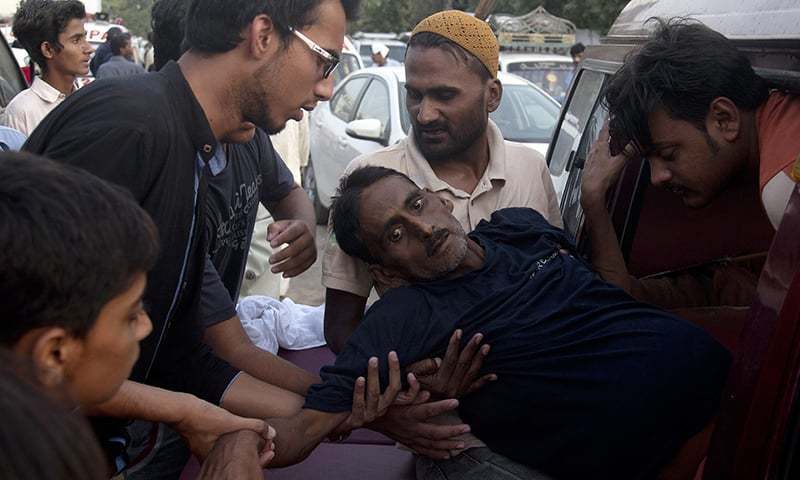
KANDAHAR: A suicide truck bomb in southern Afghanistan on Tuesday killed two civilians and wounded more than 40, officials said, in the latest attack since the Taliban began their annual offensive.
The attacker detonated a lorry loaded with explosives at the gate of the police headquarters in Lashkar Gah, capital of the volatile Helmand province.
Afghan troops and police are battling the Taliban in the first “fighting season” since Nato ended its combat mission and left local forces to take charge of security.
The Helmand blast came less than two days after 11 soldiers were killed in a Taliban ambush in the normally relatively peaceful western province of Herat.
“It was a suicide truck bomber detonating his vehicle at the gate of police headquarters,” provincial police spokesman Farid Ahmad Obaid told AFP.
“Our initial reports show 40 wounded, two killed,” he said, adding that all of the casualties were civilians.
Provincial spokesman Omar Zhwak confirmed the attack.
“The blast was very powerful. Most of the wounded people are civilians who were hit by broken glass inside their homes,” he told AFP.
A doctor at the emergency hospital in Lashkar Gah said 40 civilians were brought to the hospital.
There was no immediate claim of responsibility for the attack. But the Taliban, who launched their annual spring-summer offensive in late April, vowed nationwide attacks in what is expected to be the bloodiest summer for a decade.

Nato: coalition convoy targeted in suicide attack in Kabul

A suicide attacker driving an explosives-packed vehicle targeted a North Atlantic Treaty Organisation (Nato) military convoy in the Afghan capital, Kabul, on Tuesday, police and a Nato official said.
Police on the scene said casualties were expected.
"It was a suicide car bomber, there are casualties but it is too early to know the extent of the damage," said Kabul deputy police chief Sayed Gulagha.
A spokesman for the Nato mission in Afghanistan, US Army Col Brian Tribus, said that a coalition convoy had been attacked. “We can confirm there was an attack on coalition forces. We are gathering information,” he said.
The explosion happened at 1:20 pm on the main airport road in eastern Kabul. The blast sent a huge plume of black smoke over the city. It happened as government employees were leaving their offices and roads were choked with vehicles as the working day is shortened during the Holy month of Ramazan.

Huge explosion shakes Afghan capital near shopping district

A huge explosion shook the Afghan capital Kabul, sending a plume of black smoke over the city's western suburbs on Tuesday.
The cause of the explosion was not immediately known.
The Deputy Chief of Kabul police Sayed Gulagha has confirmed it was an explosion and says it appears to have occurred near a busy shopping district.
The blasts come a week after an audacious attack on the nation's parliament, which highlighted the ability of insurgents, who have been fighting to overthrow the Kabul government for almost 14 years, to enter the highly fortified capital to stage deadly attacks.
The Taliban's annual summer offensive has sent civilian and military casualties soaring and threatened major cities for the first time in a decade.
A fierce battle has been going on in the northern province of Kunduz, where last week Afghan forces recaptured a key district from Taliban fighters who had threatened to overrun their first provincial capital since being toppled from power in 2001.
Last week also saw the militants launch a brazen assault on parliament in Kabul, detonating a car bomb at the entrance and trading fire with security forces.
Police and soldiers beat back the attack with only two civilians killed, but the incident highlighted the Taliban's continuing ability to strike even at the heart of the heavily-secured capital.

In 'first', IS beheads two women in Syria: monitor


BEIRUT: The Islamic State (IS) group has beheaded two women in Syria on accusations of “sorcery,” the first such execution of women in Syria, the Syrian Observatory for Human Rights monitor said Tuesday.
“The Islamic State group executed two women by beheading them in Deir Ezzor province, and this is the first time the Observatory has documented women being killed by the group in this manner,” Observatory chief Rami Abdel Rahman said.
The Britain-based monitor said the executions took place on Monday and Sunday and involved two couples. In both cases, the women were executed with their husbands, with each pair accused of “witchcraft and sorcery”.
The Islamic State group has become infamous for gruesome executions and is reported to have stoned women to death on allegations of adultery. But the Observatory said this was the first time it was aware of the group beheading women.
According to the monitor, IS has executed more than 3,000 people in Syria in the year since it declared its Islamic “caliphate” in Syria and Iraq. Nearly 1,800 of them were civilians, including 74 children.
The group claimed an attack on two Houthi rebel leaders in Sanaa on Monday night that medics said had killed at least 28 people, including eight women.
The car bomb targeted Houthi rebel chief brothers Faysal and Hamid Jayache during a gathering to mourn the death of a family member, a security source said.
The jihadist group, which marked the first anniversary of the declaration of its “caliphate” in Iraq and Syria on Monday, has been ramping up its deadly campaign in Yemen since March.

Heatwave deaths: PTI moves district court for FIR against Sindh govt


KARACHI: The media adviser to Pakistan Tehreek-i-Insaf (PTI) Chairman Imran Ismail on Monday submitted an application in District Courts (South) requesting registration of a First Information Report (FIR) against the Sindh government in the wake of deaths from the recent heatwave.
It is pertinent to mention that PTI had earlier submitted an application to Civil Lines Station House Officer (SHO) Waqar Ahmed Tanoli for the registration of an FIR against the Sindh government.
The SHO had told the PTI leader that he would seek guidance from senior officers on the matter.
The application submitted in the court stated that more than 2,000 people died due to the alleged criminal negligence of Sindh Chief Minister Syed Qaim Ali Shah, Information Minister Sharjeel Memon, Health Minister Jam Mehtab, Karachi Municipal Corporation Administrator Saqib Soomro and Chairman of the Provincial Disaster Management Authority (PDMA) Salman Shah.
The court issued a notice under Section 22A of Criminal Procedure Code (CPC) to SHO Civil Lines Waqar Ahmed Tanoli directing him to submit his reply on July 2 with regards to the FIR requested by Imran Ismail.
The PTI leader had earlier said that when people were dying from heatstroke, shortage of water and electricity, the so-called rulers of Sindh were ‘enjoying Iftar parties’ and were ‘clueless’ about the pain and misery of the innocent people and their families.

MQM leader Amir Khan released from Karachi Central Jail


KARACHI: Senior Muttahida Qaumi Movement (MQM) Rabita Committee member Amir Khan was released from Karachi Central Jail on Tuesday, a day after an anti-terrorism court (ATC) granted him bail.
After fulfilling legal requirements and submission of surety bonds of Rs1 million, Khan was released today.
Yesterday, the ATC had granted bail to Khan in a case pertaining to instigating terrorism and harbouring criminals. The ATC-2 had ordered Khan to pay Rs1 million in surety bonds which was submitted today.
The court had also ordered that Khan cannot leave the country without permission.
The MQM leader was picked up with dozens of other suspects by the Rangers in a pre-dawn raid on and around the party headquarters Nine Zero in Azizabad on March 11.
While placing them under 90-day preventive detention, the paramilitary force had informed the court that they had credible information about their alleged involvement in crimes related to targeted killing and terrorism.
On June 4, the Rangers handed over the MQM leader to the police after registering a case against him and others for allegedly harbouring criminals and using them for terrorist activities and the following day he was remanded in police custody for a week.
According to the FIR, besides around 59 suspects, including Amir Khan, placed under preventive detention, the paramilitary force had also arrested during the March 11 raid 26 armed suspects, including Faisal Mehmood alias Faisal Mota, who was sentenced to death by a court in absentia for the murder of journalist Wali Khan Babar; Obaid alias K2, who was wanted in many cases; and Noman alias Nomi, an absconder in the Advocate Niamat Ali Randhawa murder case.
In a recent hearing, the defence counsel had argued that the allegations against Khan were baseless since there was no independent witness in the case and all the prosecution witnesses placed in the charge-sheet were Rangers and police officials.
He had further submitted that the prosecution remained unable to bring out any incriminating evidence against the applicant despite detaining him for around three months, adding that the arrested suspects had also not deposed against him for sheltering them.
The Rangers' raid at the headquarters of one of the largest political parties in the country today appears to have symbolic significance in the Karachi operation that has been underway since October 2013.

COAS, PM discuss Indian funding of 'subversive activities'


ISLAMABAD: Chief of Army Staff (COAS) General Raheel Sharif in a meeting with Prime Minister Nawaz Sharif on Tuesday at PM House discussed Indian involvement in funding terrorism in Pakistan.
The PM and COAS spoke about recent disclosures made in a BBC documentary which alleged that the Muttahida Qaumi Movement (MQM) received Indian funding to carry out subversive activities.
The meeting also discussed matters of internal security and the war against terrorism.
Gen Raheel Sharif apprised PM Nawaz about the progress made in Operation Zarb-i-Azb across Pakistan.
The security situation at Pakistan's eastern and western borders was also examined.
The accusations against Indian funding of MQM come at a time when the political party is facing an investigation regarding charges of money laundering. A team of investigators from Scotland Yard arrived in Islamabad yesterday to question a suspect arrested in connection with the case earlier in April.
While Altaf on Monday rejected claims of any involvement with Indian spy agency Research and Analysis Wing (RAW), MQM leader Tariq Mir confessed to the London police in an earlier interview that Altaf knew about Indian funding of MQM's activities.
The Pakistani and Indian leadership have also recently exchanged inflammatory statements back-and-forth which may culminate in PM Nawaz raising the issue of Indian interference in Pakistan's affairs at the annual United Nations General Assembly this year.

Privatisation of Neelum Jhelum power project flayed


ISLAMABAD - Terming the decision to privatise strategically important and economically viable project of Neelum Jhelum hydropower project a blunder, an expert at the Planning Commission has advised the government to rethink its decision with a cool head before embarking on the idea.
It is very strange that the project is located in the sensitive and strategic border area and the government is talking of its privatisation, an expert of the Planning Commission told The Nation on the condition of anonymity, adding that as a planning expert I will advise the government to first better consult the military experts in this regard. 
The Neelum River flows across the militarised Line of Control (LoC) that separates the Indian and Pakistani administered parts of Jammu and Kashmir and which has witnessed 1947 war between the two South Asian neighbours and is in constant tension since then. Neelum-Jhelum Hydroelectric Project is located in the vicinity Muzaffarabad. It envisages the diversion of Neelum River water through a tunnel out-falling into Jhelum River. The intake Neelum-Jhelum is at Nauseri 41km east of Muzaffarabad and has installed capacity of 969mw. This is not merely a power or business venture, you are talking about the privatisation of a project located in a sensitive area where you are confronting your enemy for the last 69 years, the official maintained.
It is pertinent to mention here that disappointed by the delay and the escalating cost of the project the 15th meeting of the Cabinet Committee on Energy, chaired by the Prime Minister, decided that a committee will be formed to look into the possibility of privatising the Nellum-Jhelum Power Project. The committee will be tasked to present its report within three months. 
The decision of the committee on privatisation has yet to come but it will be bad luck if they decided to go with the decision of privatisation. According to my knowledge a Chinese company has already shown its interest in the privatisation of the project, the official informed. “I know Chinese are our friend but as a nation you have to set a limit both for your friends and enemies.” the official maintained.
Besides its location which is in proximity with border, the official said that the decision is economically faulty too. About 70 percent work on the project and 80 percent on the tunnel has been completed, so how can you ask a private company in this stage to come and ripe the benefits, the official questioned. According the ministry of Water and Power upon completion, Neelum Jhelum hydropower project would contribute 5.15 billion units of cheap electricity to the national grid and the annual benefits accruing from the project are estimated at Rs 45 billion. 
Keeping view the earnings estimates, if even the government spend total Rs414 billion on the project it will get it back in 10 years. In this stage the project hardly requires Rs150 to 200 billion which can be earned in maximum three to four years time, the official said.
For a controversial project of metro bus, which runs on government subsidies, the government can arrange Rs 80 billion so why they cannot arrange funds for the strategically important and economically beneficial project of Neelum Jhelum, the official maintained. We want timely completion of the project but not at the price of compromising national interest, the official said. However the expert supports the idea of looking the possibility of entering into a partnership with investors to ensure its timely completion.
The revised estimated cost of the project has increased by 50 percent from Rs 274 billion to Rs 414 billion. It is also worth mentioning that during last two years, of the current government, the target completion date of the project has been revised three times.

Today's cartoon


Today's cartoon


Today's cartoon


Today's cartoon


Today's cartoon


Today's cartoon


Today's cartoon


Today's cartoon


Today's Cartoon


Today's Cartoon


TODAY'S CARTOON


Schoolchildren on their way back under the cover of umbrellas during light showers in the city on Wednesday. app


Bonfire societies parade


Living Dangerously

A young cobbler mends shoes at his roadside shop set up within an arm’s reach of an electricity transformer in the Nadirabad area near Bhatta Chowk.

Final touches

Workers paint the fountain at Hazoori Bagh before the visit of a Turkish delegation on Saturday. online

Garhi Khuda Bukhsh | Pray for peace

Former president Asif Ali Zardari, Aseefa Bhutto Zardari and Syed Owais Muzaffer offer fateha at the shrine of former prime minister Benazir Bhutto on Thursday.

Burning memories

PPP workers light candles in front of a portrait of Benazir Bhutto on her sixth death anniversary at the PPP City Secretariat. inp

Remembering a warrior

Civil society activists light candles during a ceremony to pay homage to Shaheed Salmaan Taseer on his third death anniversary, at Liberty Roundabout on Saturday. 

Extreme selfies — don’t try these at home

The Telegraph brings us some of the most bizarre, yet amazing slefies ever taken.

Independence Day of Pakistan


Bollywood actor Salman Khan sits in a car as he leaves a court.


CCP probing Toyota, Suzuki practices


ISLAMABAD: The Competition Commission of Pakistan (CCP) has initiated an inquiry into the possible anti-competitive behaviour of two car manufacturers who are putting unreasonable financial burden on the consumers.
The inquiry, under Section 37 of the Competition Act, 2010, is being conducted after the commission received various complaints regarding high prices of vehicles, hefty advance payments, delay in delivery of passenger vehicles, charging of premiums for on-spot delivery, and no facility to recall vehicles.
The inquiry will initially cover the market for consumer vehicles ranging between the engine capacity of 800cc to 1299cc in which Indus Motor Company Limited and Pak Suzuki Motor Company Limited are dominant players.
One of the major concerns shared with CCP is the consistent upward trend in prices of cars without an up-gradation of the technology.
Although the prices of locally assembled cars have increased manifolds over the past years, the manufacturers have failed to take significant measures to upgrade engines and add safety features corresponding to the increase in prices.
Similarly, one of the gravest predicaments faced by consumers of new cars is the requirement of hefty advance payments for placing the order to book a car. In this regard, it has been observed that Suzuki requires full advance payment despite a non-negotiable delay in the delivery of its vehicles.
Toyota has slashed this requirement to considerable extent, however, it still requires the buyers to pay 30 per cent of the total price of the vehicle in advance.
The advance payment requirement on the one hand rids the customers of the opportunity to earn profits on their cash, and on the other hand allows the manufactures to accrue that profit for themselves, the CCP noted.
The delay in delivery of vehicles is another burning issue. Despite having ample access capacity of dominant manufacturers, the delay is questionable particularly in the case of those models that have not undergone considerable changes and whose demand forecast can be made with relative certainty.
As is the case of advance payments, the delay in delivery of vehicles is linked to the benefits forgone by the consumers.
Furthermore, the charging of premiums by the authorised dealers of dominant manufactures for on-spot delivery has the potential to create a predicament where the manufacturer or dealers find it to their advantage to delay the deliveries of car in order to make more revenue.
It has been brought to the CCP’s knowledge in a meeting with the Engineering Development Board that neither manufacturer appears to be facilitating the option of recall of vehicles, which prima facie, indicates a lack of a healthy competition in the market.
In light of the seemingly dominant positions held by Toyota and Suzuki in the consumer vehicle sector, it appears that consumers are being left without alternatives to consider. Through this investigation, CCP will determine whether the behaviour by Toyota and Suzuki constitutes the imposition of unfair trading conditions in violation of Section 3 of the Competition Act.
Published in Dawn, June 26th, 2015

Indian recipe to fix banking sector flawed


HONG KONG: India’s piecemeal approach to fixing its banking sector is flawed.
The government may double the amount it will inject into state lenders to $3bn this year, and again next year. Though the increase is welcome, it’s still a fraction of the $50-odd billion that government-controlled banks may need to fix their balance sheets and meet new capital requirements. India needs to be more aggressive.
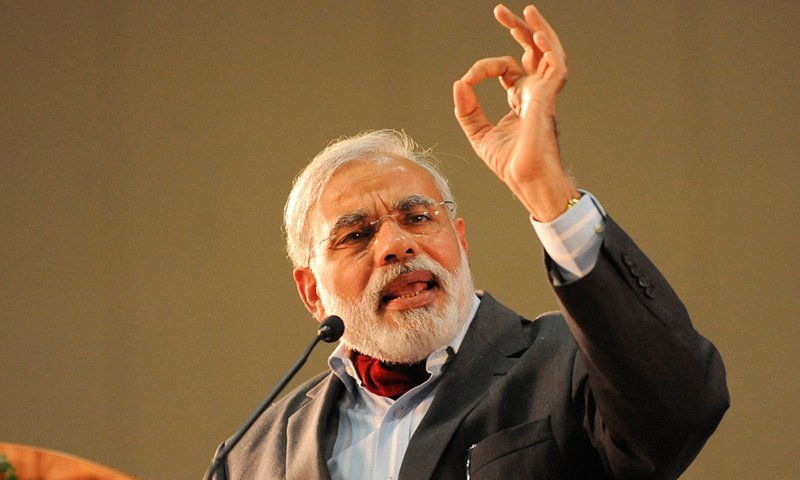
The current hand-to-mouth strategy is understandable but unworkable. Narendra Modi’s government has sought to cut the cash it hands over to banks and only allocate funds to those institutions that met certain return targets.
It has also encouraged banks to go out and raise capital. The problem is that weak earnings and a slower-than-expected pickup in the economy means few banks are able to attract outside investors. The government’s reluctance to reduce its shareholdings below 50 per cent is another hurdle. A drive to improve governance will take more time.
The state banks desperately need more equity. They dominate a national banking system where more than 10pc of assets were stressed as of March 2015, according to credit ratings firm ICRA — and that’s just the ones lenders admit to. The real number may be twice as high.
Even if state banks set aside sufficient provisions to just cover existing impaired loans, Morgan Stanley analysts estimate that the core Tier 1 capital ratios of the institutions they cover would fall to between 4 and 7pc. The problem is likely to be even worse for the smaller, weaker, public sector lenders.
The government already missed a prime opportunity to tackle the problem when the stock market soared on hopes of economic reform. Investors have since tempered their enthusiasm: some bank shares have fallen by more than a third this year. Capital could become even harder to find when the US Federal Reserve raises interest rates.
A much larger recapitalisation would widen India’s fiscal deficit. But it would also ensure that the banks are ready to fund the country’s investment cycle when it eventually picks up. The government’s piecemeal approach risks dragging on India’s growth.
Published in Dawn, June 28th, 2015

Nepra reduces wind power tariff by 20 per cent


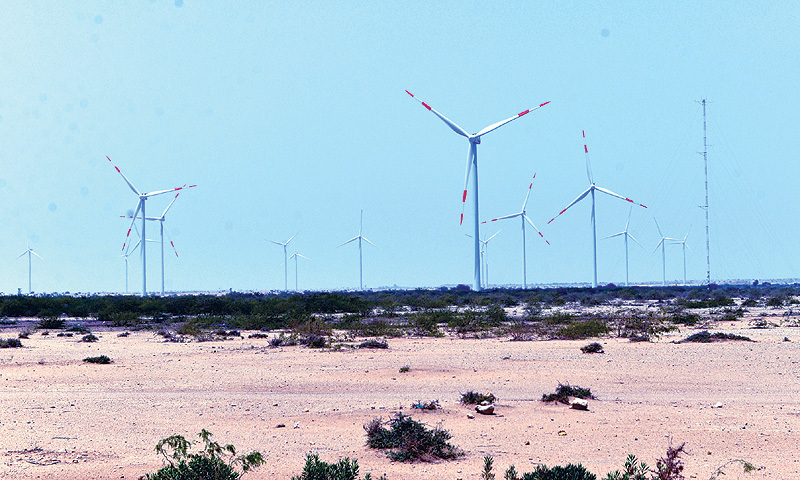
ISLAMABAD: Amid criticism, the National Electric Power Regulatory Authority (Nepra) has reduced levelised upfront tariff for wind power projects by 20 per cent to Rs10.6048 per unit from Rs13.1998.
The revised tariff came after protests by the Sindh government over a ban imposed by the federal government on new wind and solar projects. The centre said the temporary ban was meant to translate falling technology prices of wind energy in the international market into domestic tariff.
The revised tariff was, however, immediately rejected by the investors of wind energy projects. They alleged that the energy policy was heavily tilting towards Punjab-based solar power projects, about 1,000MW of which had been awarded to a single firm through a negotiated deal instead of bidding.
Nepra said on Thursday the new tariff would remain applicable for six months from the date of notification. The investors opting for this tariff are required to achieve financial close within one year from the date of award of upfront tariff to them.
The targeted maximum construction period after financial close is 18 months. “This initiative, besides ensuring energy security, will provide clean, renewable energy at an affordable price to the consumers and help mitigate power shortfall,” Nepra added.
It said wind power tariff had been reduced because of advancement in technology and it would benefit economy and industry due to its unique benefits and competitiveness.
“It is a shocking tariff,” said a wind energy investor, adding that 1,000MW solar projects in Punjab had been given higher tariff despite its 17pc plant efficiency, compared to wind energy’s 38.5pc plant efficiency.
On top of that, he said, the power agreement would be finalised only on the basis of yet to be completed grid study by the National Transmission and Dispatch Company (NTDC). This means the wind project will not apply for tariff with Nepra before the NTDC’s grid report, being the pre-requisite.
Published in Dawn, June 27th, 2015

Govt to recover all circular debts through consumer tariff


ISLAMABAD: The government and regulators have decided to settle all outstanding gas receivables and electricity circular debt against lower international fuel prices instead of directly benefiting the consumers.
On Friday, the National Electric Power Regulatory Authority (Nepra) approved a reduction of Rs2.62 per unit in fuel price of electricity tariff but decided to withhold 76 paisa per unit to recover Gas Infrastructure Development Cess (GIDC).
As a consequence, Nepra allowed Rs1.86 per unit reduction in tariff on account of monthly fuel adjustment for April.
This reduction would not be available to consumers using less than 300 units a month as, under a recent decision, the government felt these consumers were already getting subsidised electricity.

Power rates cut by Rs1.86 per unit


The government has committed with the International Monetary Fund to ensure recovery of Rs145 billion from consumers on account of GIDC during the outgoing fiscal year and wipe out power sector circular debt in three years through tariff adjustments.
At a public hearing presided over by Nepra Chairman Tariq Sadozai, the regulator allowed electricity companies to about Rs11bn GIDC arrears in instalments from the power consumers. The recovery of GIDC imposed in last year’s budget had been stayed by various high courts on different grounds and finally cleared by the Supreme Court of Pakistan.
The Central Power Purchasing Agency (CPPA) requested Nepra to reduce power tariff by Rs2.62 per unit on account of fuel adjustment for April. Nepra noted that it was an appropriate time that recovery of GIDC adjustment be made in consumer tariff as lower fuel prices would help reduce electricity cost.
Therefore, it imposed 76 paisa per unit GIDC on gas to be used as fuel by power producers to recover Rs11bn in instalments in April, May and June that would be made part of bills for August and September.
The remaining relief of Rs1.86 per unit would be passed on to consumers in the billing month of August. The rate cut will not apply to K-Electric consumers.
The CPPA told the public hearing that 7.17bn units were sold to power distribution companies at a cost of Rs45.2bn in April. The transmission losses stood at 2.19 per cent. The reference fuel price was Rs8.92 per unit which was recovered from consumers in April but actual cost worked out at Rs6.30 per unit because of lower fuel prices and better energy mix.
The share of hydropower generation was 20.06pc, furnace oil 39.32pc, gas 26.7pc, coal 0.18pc, HSD (high speed diesel) 5.06pc and nuclear 5.88pc. The cost of furnace oil-based generation came out at Rs9.86 per unit, HSD at Rs13.85, natural gas Rs5.18, coal Rs4.49 and nuclear power Rs1.18. Hydropower generation did not have any fuel cost component.
In a related decision, Nepra allowed power firms to burden consumers with Rs11bn arrears on account of GIDC following the passage of GIDC Bill 2015 by parliament after its clearance from the apex court.
The power regulator believed that it would be adjusted to absorb the impact of falling oil prices in future fuel price adjustments and, therefore, consumers would not feel additional burden.
The tariff for gas-based power plants would go up by Rs4.3 to Rs4.5 per unit for the recovery of Rs11bn arrears from the consumers.
Engro Powergen Qadirpur Limited (EPQL) filed a petition before the Nepra against GIDC Act 2015 pleading that the demand raised by SNGPL (Sui Northern Gas Pipelines Limited) for recovery of GIDC due from 2013 to May 2015 in lump sum cannot be met because the petitioner had never recovered it from NTDC (National Transmission And Despatch Company), the sole purchaser of the electricity produced by EPQL.
Fauji Kabirwala’s power plant also requested that GIDC should be treated as a change in law and allowed as pass-through in tariff. GIDC adjustment was allowed in case of five IPPs — Engro Foundation, Saif, Sapphire, Orient and Halmore.
It was further pleaded that the recovery could not be affected as Nepra had not revised the tariff of the petitioner to factor in GIDC due to various restraining orders passed by different high courts. The distribution companies were to recover the same from electricity consumers. Therefore, the situation had been complicated and court directed the power regulator to look into this matter.
The cess was imposed by the previous government of Pakistan Peoples Party (PPP) to raise funds for gas import projects like Iran gas pipeline and LNG import. The government has collected Rs94bn so far. But the money was not used for these projects and this cess was turned down even by the Supreme Court on technical grounds.
The present government has succeeded to get the GIDC bill 2015 passed from parliament to legalise already collected Rs94bn and to collect arrears from the gas consumers.
The SNGPL had also asked gas-based independent power producers to pay arrears but the EPQL moved to court and Nepra has now decided to recover Rs11bn arrears from the power consumers on account of fuel adjustments. The share of gas-based plants is around 22pc.
Nepra increased gas price for power plants by Rs100 from Rs488.23 per million British thermal units (mmbtu) to Rs588.23 per mmbtu on account of GIDC.
Published in Dawn, June 27th, 2015

No longer so secret, Swiss banks look to expand after purge


ZURICH: Switzerland’s private banks are close to ridding themselves of undeclared European accounts, a salutary process but one which has undermined efforts to grow their businesses.
Following the financial crisis, cash-strapped governments chased accounts hidden at banks in Zurich, Geneva and Ticino where wealthy Europeans had taken advantage of Switzerland’s famous bank secrecy rules.
Stunned by arrests of high-profile clients for tax evasion, large numbers of European citizens have joined voluntary disclosure programmes and pulled cash from Swiss banks to pay penalties and clear back taxes.
After billions of Swiss francs in withdrawals, recent figures from UBS suggest the tide is beginning to turn.
In the first three months of 2015, the Zurich-based bank reported its steepest quarterly net percentage rise in European assets in over three years. That has helped to justify the bank’s decision to refocus on wealth management and slim down its investment bank.
“For the industry, and in particular UBS, the bulk of the European cross-border outflows may be behind us,” said Kinner Lakhani, an analyst at Citi.
Wealth in western Europe is expected to grow more slowly than the global average in the coming years, according to a Boston Consulting Group study.
But European clients are frequently viewed as more profitable because they are willing to pay banks higher fees to manage their often-inherited wealth.
There are still bumps in the road ahead for Swiss banks.
A global tax data sharing programme, which Switzerland is set to implement from 2018, could trigger a fresh round of outflows, especially from emerging market depositors.
An end to European withdrawals however, would make it easier for banks to grow the amount of assets they manage. In recent years Swiss private banks have had to drum up fresh business simply to offset the amount of withdrawals.
Clearing the books of undeclared accounts has been no small task. One prominent Swiss banker estimates that they made up more than 80 per cent of many banks’ assets prior to the financial crisis.
But at the end of 2014 some 95pc of German assets with Swiss banks had been declared, according to the Swiss Bankers Association. The industry group expects this to reach 100pc by the end of 2015.
France, Britain and Austria have also given taxpayers the chance to disclose undeclared accounts.
Bank secrecy in Switzerland for foreign account holders was effectively when the country signed up to the Organisation for Economic Cooperation and Development’s (OECD) tax data sharing programme last year.
Published in Dawn, June 28th, 2015

HSBC Bank Oman agrees to sell Pakistan business to Meezan Bank


DUBAI: HSBC Bank Oman has agreed to sell its banking business in Pakistan to Meezan Bank , a sharia-compliant Pakistani lender, it said on Sunday.
The deal, which is subject to regulatory and other approvals, is expected to be completed during the second half of 2015, the bank said in a statement.
The business had one branch and gross assets of around $40 million as of March 31, it said.
The sale, at a small discount to the net asset value of the business, will not materially impact the full-year profits of HSBC Bank Oman, it said.
The bank is an indirect 51 percent-owned subsidiary of HSBC Holdings.

SBP injects Rs668bn into banks

The dichotomy of a burgeoning crude relationship


RIYADH: The budding relationship between Riyadh and Moscow is faced with a reality check.
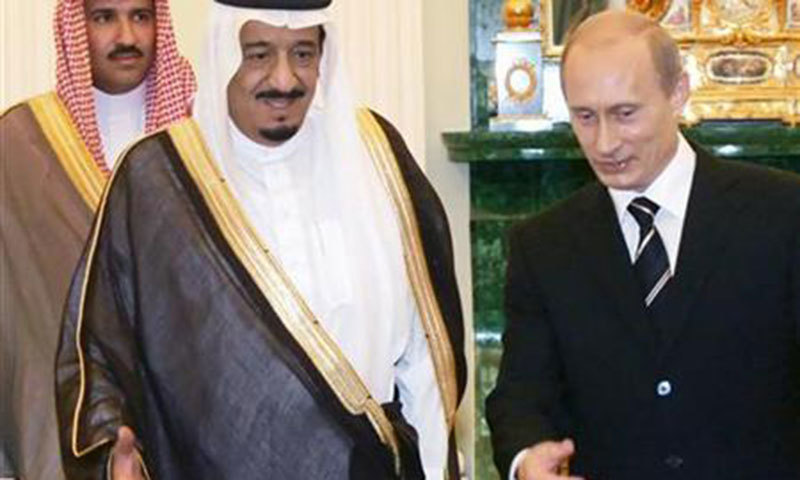
In the rapidly changing geopolitical environment, Saudi Arabia and Russia are forging ahead — fostering a closer relationship. When the Saudi Deputy Crown prince Mohammad bin Salman, accompanied not only by foreign minister Adel bin Jubeir but also petroleum minister Ali Al-Naimi, called on Russian President Vladimir Putin in St. Petersburg on June 18, six major deals were signed between the world’s two top crude producers.
The deals ranged from agreement in defence sector to enhanced cooperation in energy development. It also covered greater cooperation on nuclear energy development.
Interestingly during the visit, the two sides also announced forming a working group for joint energy projects. Given that the US and EU sanctions limit the transfer of new oil and gas technology to Russian state oil firms, reports indicate that Russia could be seeking enhanced oil and gas recovery and advanced drilling technology from Saudi Arabia, especially for use in the older fields in West Siberia.
With a growing list of global research centers in Beijing, Houston, Aberdeen, Massachusetts and others, Saudi Aramco is today regarded as the biggest global investor in new oil and gas technologies.
But while Saudi Arabia and Russia seem to be expanding their relationship, they continue to compete, rather fiercely, for crude market share. In May, Russia’s oil output reached a record 10.78 million barrels a day, pretty close to the Soviet era production of 1987. This was significantly up from May last year, when Russian production stood at 10.08m bpd. And the world’s leading crude exporter, Saudi Arabia’s output is also in top gear. Saudi output went up by 697,000 bpd between February and May, this year, rising to 10.3m bpd in May 2015, as against 9.69m bpd a year earlier.
And there are indications this could go up further. Oil Minister Ali al-Naimi said in St. Petersburg the country has about one and a half million to 2m bpd of spare capacity, and is ready to raise production if demand calls for such an action. Goldman Sachs and Citi Group are also now projecting that Riyadh will likely start to push production to 11m bpd in the second half of 2015.
And China remains the focus of attention. From Moscow to Riyadh and Tehran to Baghdad, all major stake holders seem to be concentrating on Beijing to ensure a healthy pie of the Chinese cake. For now though, Moscow seems to have pipped Riyadh as the top supplier to Biejing.
In May, China imported a record 3.92m tonnes from Russia, Bloomberg reported. That’s equivalent to 927,000 barrels a day, a 20 per cent increase from the previous month. Russian exports to China have more than doubled since 2010. As western sanctions over the Ukraine crisis started to bite, Moscow has had to seek alternative markets.
A number of other factors too seem to be aiding Moscow in its bid to expand it crude sales to China – at the expense of Saudi Arabia and others. Moscow’s decision to accept the proceeds from oil sales in Chinese currency yuan seems to have helped significantly in the rise in exports to Beijing. Further, in 2013, Russia’s largest oil producer, Rosneft, signed an $85 billion deal with China’s Sinopec to deliver 100m tonnes of crude over 10 years. And then Rosneft also struck a 25-year contract, worth $270bn, with Chinese state-owned oil company CNPC for the delivery of 365m tonnes of oil.
Consequent to the development, Saudi crude exports to China, slumped by 42pc last month from April, to 3.05m tonnes - 722,000 bpd.
However, one needs to underline here, with brute summer around and the Saudi domestic consumption on rise, its crude exports could get compromised during the months. Less export to China may also be a manifestation of that.
Yet the fact remains that despite growing cooperation, Russia and Saudi Arabia continue to fiercely compete in the global crude markets. And that is the dichotomy of this otherwise burgeoning relationship.
Published in Dawn, June 28th, 2015

The dichotomy of a burgeoning crude relationship


RIYADH: The budding relationship between Riyadh and Moscow is faced with a reality check.
In the rapidly changing geopolitical environment, Saudi Arabia and Russia are forging ahead — fostering a closer relationship. When the Saudi Deputy Crown prince Mohammad bin Salman, accompanied not only by foreign minister Adel bin Jubeir but also petroleum minister Ali Al-Naimi, called on Russian President Vladimir Putin in St. Petersburg on June 18, six major deals were signed between the world’s two top crude producers.
The deals ranged from agreement in defence sector to enhanced cooperation in energy development. It also covered greater cooperation on nuclear energy development.
Interestingly during the visit, the two sides also announced forming a working group for joint energy projects. Given that the US and EU sanctions limit the transfer of new oil and gas technology to Russian state oil firms, reports indicate that Russia could be seeking enhanced oil and gas recovery and advanced drilling technology from Saudi Arabia, especially for use in the older fields in West Siberia.
With a growing list of global research centers in Beijing, Houston, Aberdeen, Massachusetts and others, Saudi Aramco is today regarded as the biggest global investor in new oil and gas technologies.
But while Saudi Arabia and Russia seem to be expanding their relationship, they continue to compete, rather fiercely, for crude market share. In May, Russia’s oil output reached a record 10.78 million barrels a day, pretty close to the Soviet era production of 1987. This was significantly up from May last year, when Russian production stood at 10.08m bpd. And the world’s leading crude exporter, Saudi Arabia’s output is also in top gear. Saudi output went up by 697,000 bpd between February and May, this year, rising to 10.3m bpd in May 2015, as against 9.69m bpd a year earlier.
And there are indications this could go up further. Oil Minister Ali al-Naimi said in St. Petersburg the country has about one and a half million to 2m bpd of spare capacity, and is ready to raise production if demand calls for such an action. Goldman Sachs and Citi Group are also now projecting that Riyadh will likely start to push production to 11m bpd in the second half of 2015.
And China remains the focus of attention. From Moscow to Riyadh and Tehran to Baghdad, all major stake holders seem to be concentrating on Beijing to ensure a healthy pie of the Chinese cake. For now though, Moscow seems to have pipped Riyadh as the top supplier to Biejing.
In May, China imported a record 3.92m tonnes from Russia, Bloomberg reported. That’s equivalent to 927,000 barrels a day, a 20 per cent increase from the previous month. Russian exports to China have more than doubled since 2010. As western sanctions over the Ukraine crisis started to bite, Moscow has had to seek alternative markets.
A number of other factors too seem to be aiding Moscow in its bid to expand it crude sales to China – at the expense of Saudi Arabia and others. Moscow’s decision to accept the proceeds from oil sales in Chinese currency yuan seems to have helped significantly in the rise in exports to Beijing. Further, in 2013, Russia’s largest oil producer, Rosneft, signed an $85 billion deal with China’s Sinopec to deliver 100m tonnes of crude over 10 years. And then Rosneft also struck a 25-year contract, worth $270bn, with Chinese state-owned oil company CNPC for the delivery of 365m tonnes of oil.
Consequent to the development, Saudi crude exports to China, slumped by 42pc last month from April, to 3.05m tonnes - 722,000 bpd.
However, one needs to underline here, with brute summer around and the Saudi domestic consumption on rise, its crude exports could get compromised during the months. Less export to China may also be a manifestation of that.
Yet the fact remains that despite growing cooperation, Russia and Saudi Arabia continue to fiercely compete in the global crude markets. And that is the dichotomy of this otherwise burgeoning relationship.
Published in Dawn, June 28th, 2015