#WPFD2020: Pakistan slams Modi govt for 'muzzling independent voices' of media, journalists - The News


AFP/Prakash Singh/Files
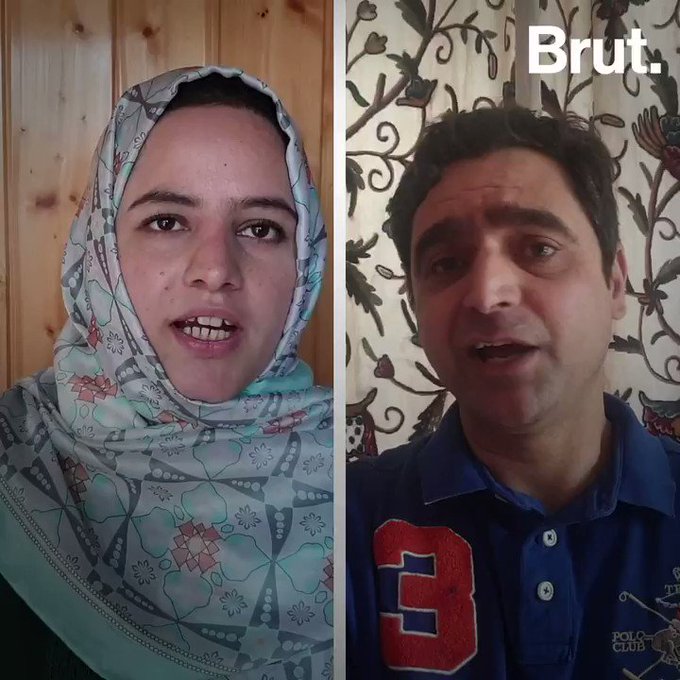
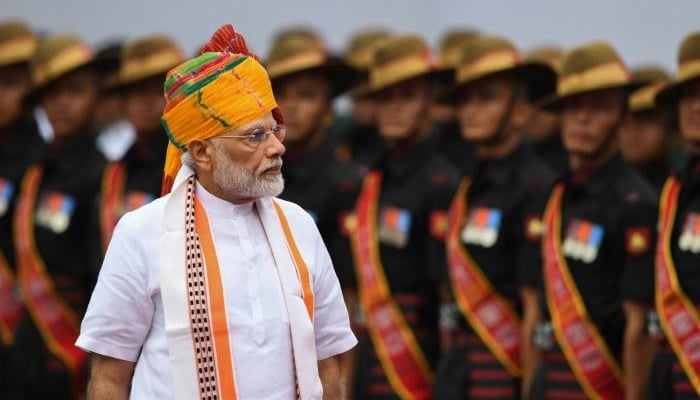
ISLAMABAD: Pakistan on Sunday slammed Indian Prime Minister Narendra Modi's government for "muzzling independent voices" of the media and journalists reporting from occupied Kashmir, where a media blackout has continued for months, harassment of reporters is on the rise, and those who speak up face intimidation.
In a statement issued Sunday, the World Press Freedom Day 2020, the foreign ministry said it condemned the Indian government-sanctioned repression, noting that "while saluting their exceptional courage, we also honour the sacrifice of those Kashmiri journalists who have laid down their lives in the line of duty".
"The latest among those martyrs was Shujaat Bukhari in June 2018," the statement added. "It is commendable that Kashmiri journalists continue to work with conviction and professionalism, despite the heavy handedness of Indian occupation forces acting with impunity under the draconian Public Safety Act (PSA), Armed Forces Special Powers Act (AFSPA), and Unlawful Activities Prevention Act (UAPA).
"Global media watchdogs, Indian and international human rights groups, and civil society organizations have expressed deep concerns over unprecedented restrictions imposed on the media, the widespread intimidation of Kashmiri journalists, and the precarious state of their work environment," it noted further.

Situation 'more alarming'

Indian Prime Minister Narendra Modi's government — led by the right-wing Bharatiya Janata Party (BJP) and inspired by the Rashtriya Swayamsevak Sangh (RSS) — was bent on "hiding its blatant human rights violations in [India-occupied Kashmir] and is bent on muzzling independent voices of the media and journalists", the foreign ministry said.
"The situation has become more alarming after India’s illegal and unilateral actions of 5 August 2019," when it scrapped occupied Kashmir's special status under the constitution and imposed a curfew.
"Pakistan condemns this Indian campaign of harassment and intimidation and calls upon India to immediately lift all communication restrictions in IOJ&K; withdraw frivolous cases filed against Kashmiri journalists; and restore all fundamental freedoms of the Kashmiri people," the statement added further.

Violation of Fourth Geneva Convention

Late last month, Prime Minister Imran Khan had said Modi's government was committing war crimes in occupied Kashmir under the cover of the virus pandemic and that New Delhi was violating the Fourth Geneva Convention by continuing the genocide of Kashmiris.
"Under cover of COVID19 global pandemic, the Modi Govt with its fascist Hindutva Supremacist RSS-driven ideology continues its war crimes in IOJK," PM Imran had said on Twitter.
The premier had added that the United Nations recognised occupied Kashmir as a disputed territory and that the international community had a responsibility to take note of India's war crimes there.

Reporting from Kashmir 'virtually impossible'

In an April report, the Reporters Without Borders (RSF) had said it had become "virtually impossible” for journalists to report from occupied Kashmir, pushing India two spots down from last year to 142.
The RSF report had also noted that India’s score was heavily affected by the situation in occupied Kashmir. The group called the region a “vast open prison” due to shutting down of fixed line and mobile Internet connections by the Modi-led government.
The RSF had also stated that there were constant press freedom violations in the country, including police violence against journalists, ambushes by political activists, and reprisals instigated by criminal groups or corrupt local officials.

'Particularly virulent' campaigns

“Ever since the general elections in the spring of 2019, won overwhelmingly by Prime Minister Narendra Modi’s Bharatiya Janata Party, pressure on the media to toe the Hindu nationalist government’s line has increased,” said the report.
The coordinated hate campaigns launched on social media against journalists who speak or write about subjects that annoy Hindutva followers were alarming, it added, noting that the campaigns also called for the concerned journalists to be murdered.
“The campaigns are particularly virulent when the targets are women," the report had noted. "Criminal prosecutions are meanwhile often used to gag journalists critical of the authorities, with some prosecutors invoking Section 124a of the penal code, under which 'sedition' is punishable by life imprisonment."

As hopes of coronavirus pandemic slowing down rise, Europe mulls more lockdown easing - The News


AFP/Pau Barrena
Europe on Sunday prepared for a further cautious easing of coronavirus restrictions following signs the pandemic may be slowing, with hard-hit Italy set to follow Spain in allowing people outside.
More than 243,000 people have been killed and 3.4 million infected worldwide by the virus, which has left half of humanity under some form of lockdown and pushed the global economy towards its worst downturn since the Great Depression.
With signs that the spread of the contagion has been brought under control, parts of Europe, Asia and the United States have begun to lift restrictions to try to inject life into economies crippled by weeks of closures and ease the pressure from populations wearying of confinement.
After a two-month lockdown in Italy — with the second-highest number of virus deaths in the world — people on Monday will be allowed to stroll in parks and visit relatives. Restaurants can open for takeaway and wholesale stores can resume business, but there was some confusion about the extent of the easing.
"I'm hoping this morning's paper will clear up some of the many questions about what we can and can't do," said Pietro Garlanti, a 53-year-old cleaner, as he queued at a kiosk. "I want to take my old mum to the sea-side, can I?"
Italian authorities have stressed that preventative measures are still needed.
"On the one hand, we're super excited for the reopening, we're already organising various activities the kids will be able to do with their grandparents outdoors, workshops in the garden, that sort of thing. The kids can't wait to see them," said Marghe Lodoli, who has three children.
"On the other hand, it's disorientating. The rules are not clear, and we're not sure if just using common sense will do."
Elsewhere in Europe, Germany will continue its easing on Monday, while Slovenia, Poland and Hungary will allow public spaces and businesses to partially reopen.
With health experts warning the disease could hit hard once again, governments are sticking to measures to control the spread of the virus and more testing to try to track infections even as they relax curbs on movement.
Face masks will be mandatory on public transport starting Monday in Spain, where people were allowed to go outdoors on Saturday after a 48-day lockdown.

Lockdowns ease in Asia

With pressure growing on governments worldwide to balance public health requirements with the need to ease intense economic pain, some nations in Asia announced similar measures.
South Korea — once the second worst-hit nation on the planet — said Sunday it would ease a ban on some gatherings and events as long as they "follow disinfection measures".
Thailand meanwhile allowed businesses such as restaurants, hair salons and outdoor markets to reopen on Sunday so long as social distancing was maintained and temperature checks carried out.
Despite the reopenings, experts have cautioned that many countries are still not through the worst of their outbreaks yet.
In the latest sign that the pandemic remains a serious threat, the Philippines suspended all flights into and out of the country for a week starting Sunday in a bid to ease the pressure on its congested quarantine facilities.
And to boost morale in what many expect to be a long fight, the armed forces of India — where the world's biggest lockdown is in force — organised tributes to the nation's medical workers, including helicopters showering petals on hospitals.
Elsewhere, Iranian President Hassan Rouhani announced that mosques would reopen across large parts of the Islamic Republic, after they were closed in early March to try to contain the Middle East's deadliest COVID-19 outbreak.
Rouhani warned, however, that while Iran would reopen "calmly and gradually", it should also prepare for "bad scenarios".

'Beyond breaking point'

Across the Pacific, the pressure to ease virus measures is intense on leaders in the US, where the economy has been hammered with tens of millions left jobless.
The US has the most coronavirus deaths in the world and President Donald Trump is keen for a turnaround to help reduce the economic pain.
Florida is set to ease its lockdown on Monday, as authorities in other states wrestle with pressure from demonstrators — some armed — who have protested against the lockdowns.
There are signs that the pandemic is slowing down in some parts of the US.
In New York City, the epicentre of the US outbreak, an emergency field hospital erected in Central Park is set to close, the Christian charity running it said Saturday, as virus cases decline in the city.
But authorities are wary of letting their guard down too fast, with fears the virus could wreak havoc in the most vulnerable communities in the US.
A massive wave of infections is sweeping through America's prison population — the world's largest at 2.3 million — with coronavirus deaths on the rise in jails and penitentiaries across the country.
Riots over inadequate protection and slow responses by authorities have already taken place in prisons in Washington state and Kansas.
"Things are beyond breaking point at this facility," said Brian Miller, an officer at the Marion prison in Ohio. "Right now it's hell."

Today's Headlines: The Covid-19 Riddle: Why Does the Virus Wallop Some Places and Spare Others?

Before Covid-19, Trump Aide Sought to Use Disease to Close Borders
View in Browser | Add nytdirect@nytimes.com to your address book.

Monday, May 4, 2020

Top News

The Covid-19 Riddle: Why Does the Virus Wallop Some Places and Spare Others?

The Covid-19 Riddle: Why Does the Virus Wallop Some Places and Spare Others?

By HANNAH BEECH, ALISSA J. RUBIN, ANATOLY KURMANAEV and RUTH MACLEAN

Experts are trying to figure out why the coronavirus is so capricious. The answers could determine how to best protect ourselves and how long we have to.

Before Covid-19, Trump Aide Sought to Use Disease to Close Borders

Before Covid-19, Trump Aide Sought to Use Disease to Close Borders

By CAITLIN DICKERSON and MICHAEL D. SHEAR

The president's chief adviser on immigration, Stephen Miller, had long tried to halt migration based on public health, without success. Then came the coronavirus.

Why Biden's Choice of Running Mate Has Momentous Implications

Why Biden's Choice of Running Mate Has Momentous Implications

By JONATHAN MARTIN and ALEXANDER BURNS

Joe Biden has hinted that he might serve only one term if he wins. That would set up a woman as the front-runner for 2024 and perhaps define the Democratic agenda for the next decade.

For more top news, go to NYTimes.com »
ADVERTISEMENT
Get New York Today in Your Inbox

Get New York Today in Your Inbox

What you need to know to start your day in New York, including news, weather, free events and a look at the lighter side of life.
Sign up »

Editors' Picks

Post-Pandemic Offices Seek Open Flow of Ideas, Not of the Virus

Health

Post-Pandemic Offices Seek Open Flow of Ideas, Not of the Virus

By MATT RICHTEL

As businesses contemplate the return of workers to their desks, many are considering large and small changes to the modern workplace culture and trappings.

Domino's Is Raking in Money. What About Its Employees?

Opinion

Domino's Is Raking in Money. What About Its Employees?

By CARLOS CONTRERAS, FELIX LOPEZ BARBOSA, ASAF KASTNER and ISABEL CASTRO

Some Domino's workers finally got Covid-19 protections, but it took an outbreak and a strike.

|
Get unlimited access to NYTimes.com and our NYTimes apps. Subscribe »
Copyright 2020 The New York Times Company
620 Eighth Avenue New York, NY 10018